Kitchen Hood Cleaning in Dubai: A Complete Guide for Fire Safety & Compliance
Introduction
If you run a restaurant or commercial kitchen in Dubai, kitchen hood cleaning Dubai regulations are not optional they are a legal requirement. Grease accumulates in your exhaust hood every day, quietly raising the risk of fire and regulatory penalties. Dubai Civil Defence and NFPA 96 standards exist precisely because neglected hoods are one of the leading causes of commercial kitchen fires. This guide walks you through everything you need to know: the legal framework, how cleaning is done, how often to schedule it, and what happens when compliance is ignored.
Key Takeaways
- Kitchen hood cleaning in Dubai is mandatory under Dubai Civil Defence regulations and NFPA 96 standards non-compliance can result in fines or forced closure.
- Most commercial kitchens in Dubai require professional hood cleaning every one to three months depending on cooking volume and type.
- Proper kitchen exhaust cleaning UAE-wide reduces fire risk, improves air quality, and extends the life of your exhaust equipment.
Why Kitchen Hood Cleaning Is a Legal Requirement in Dubai
Commercial kitchens in Dubai operate under strict fire safety laws that make professional hood cleaning non-negotiable.
Dubai Civil Defence enforces fire safety standards across all food service establishments, including restaurants, hotel kitchens, cloud kitchens, and catering facilities. Under these regulations, kitchen exhaust systems must be maintained and inspected on a defined schedule. The internationally recognised NFPA 96 standard Standard for Ventilation Control and Fire Protection of Commercial Cooking Operations is the technical benchmark used in the UAE. It specifies cleaning frequencies based on the volume and type of cooking. Failure to comply can result in warnings, fines, or even temporary closure of your establishment. Kitchen hood cleaning is therefore not just a hygiene matter it is a legal and commercial necessity for every food business in Dubai.
The Hidden Fire Risk: What Grease Build-Up Actually Does
Grease is not just a mess it is a highly flammable fuel source that accumulates silently inside your exhaust system.
Every time food is cooked on an open flame or high-heat surface, grease-laden vapours rise into the exhaust hood and travel through the duct system. Over time, this grease deposits onto every internal surface. A single spark from a gas burner, an overheated pan, or an electrical fault is enough to ignite a grease layer and send a flash fire racing through the duct system and into the ceiling cavity. According to the National Fire Protection Association, commercial cooking equipment is the leading cause of restaurant fires globally. In Dubai’s high-volume, high-temperature kitchen environments, this risk is compounded by continuous operation and intense cooking methods. Regular kitchen exhaust cleaning UAE services are the most direct way to eliminate this fire hazard at its source.
How Professional Kitchen Hood Cleaning Works
Professional commercial kitchen hood maintenance follows a systematic, multi-stage process designed to remove every trace of grease from the system.
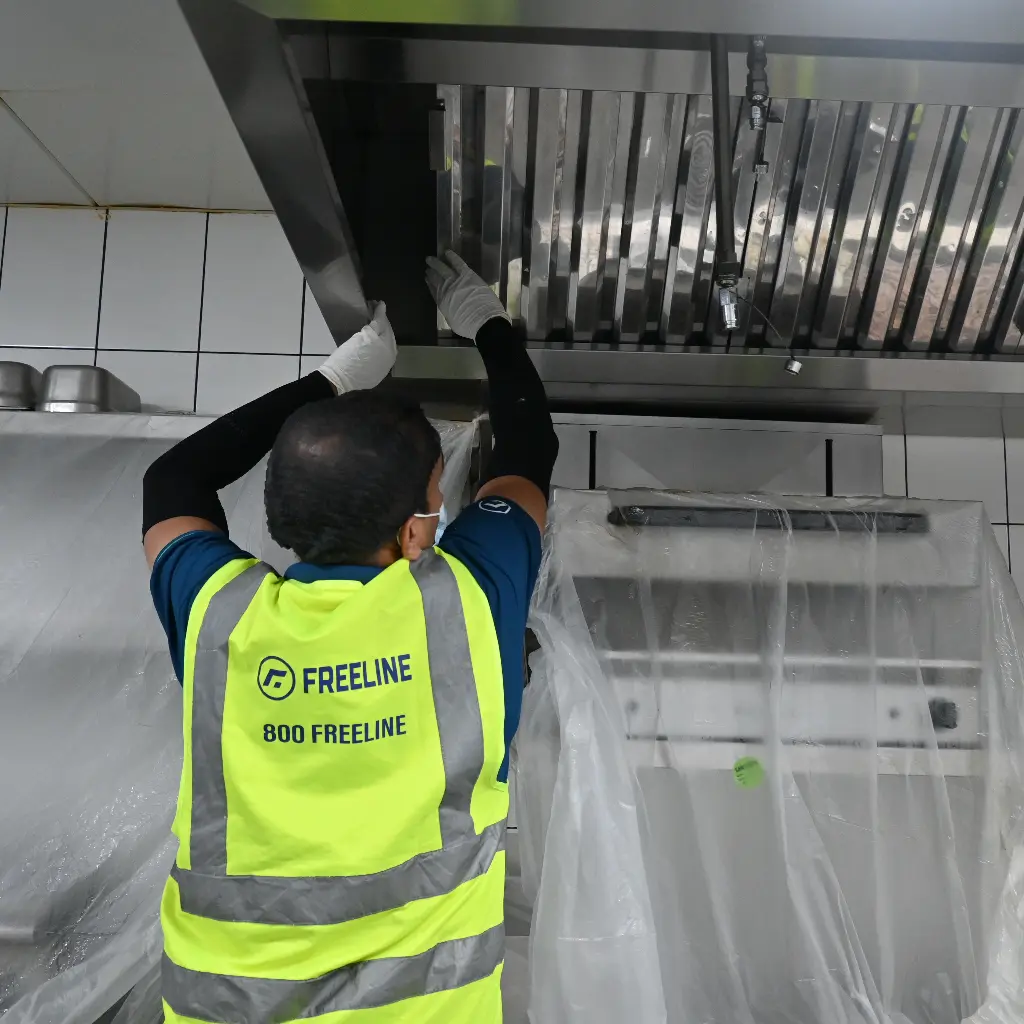
A certified technician begins by covering cooking equipment and surfaces to protect them from cleaning agents. The hood filters are removed and soaked in a degreasing solution. The interior of the hood, all duct surfaces, fans, and motors are then cleaned using high-pressure hot water jetting combined with industrial-grade degreasers. This process removes grease not just from visible surfaces but from the deep interior sections of the ductwork that a standard kitchen clean would never reach. Once cleaning is complete, the technician inspects the entire system for damage, blockages, or compliance issues. A service certificate is issued, which serves as documentation for Dubai Civil Defence inspections. This full-service approach is what separates professional commercial kitchen hood maintenance from a basic in-house wipe-down.
How Often Should You Schedule Kitchen Hood Cleaning in Dubai?
Cleaning frequency depends on your cooking volume, fuel type, and the kind of food you prepare and NFPA 96 gives clear guidance on each category.
| Cooking Type / Volume | Recommended Cleaning Frequency |
| High-volume operations (24-hour, wok cooking, charbroiling) | Monthly |
| Moderate-volume (standard restaurants, cafes) | Every 3 months |
| Low-volume (seasonal, day-use kitchens) | Every 6 months |
| Solid fuel cooking (wood, charcoal) | Monthly or more frequently |
Most mid-range Dubai restaurants fall into the quarterly category, but hotel kitchens, fast-food chains, and high-throughput commercial operations will need monthly service. Your cleaning provider should assess your operation and recommend a schedule that keeps you compliant. It is also worth noting that the grease in your kitchen hood is connected to the broader grease management system grease trap cleaning in Dubai should be scheduled alongside hood cleaning for a fully compliant kitchen.
Restaurant Safety Compliance Dubai: What Inspectors Look For
Understanding what Dubai Civil Defence inspectors check gives you a clear picture of the compliance standard your kitchen must meet.
Inspectors assess the physical condition and cleanliness of the hood, filters, ductwork, and exhaust fans. They look for grease accumulation levels, evidence of recent professional cleaning, and the presence of a valid service certificate from a licensed provider. They also check that the system’s airflow and suppression systems are functional and unobstructed. Maintaining restaurant safety compliance Dubai requires documented proof of cleaning on schedule verbal assurances are not accepted. Kitchens that fail an inspection may be required to close until the issue is remedied, causing significant revenue loss. Building a regular cleaning schedule with a certified provider, and keeping records of every service visit, is the only reliable way to stay ahead of inspections.
The Business Case: Beyond Compliance
Keeping your kitchen hood clean has direct financial benefits that go well beyond avoiding fines.
A clean exhaust system operates more efficiently. Fans and motors that are free of grease build-up run at lower temperatures, consume less energy, and last significantly longer. Poor exhaust performance also affects the working environment a greasy, poorly ventilated kitchen is hotter, smokier, and less safe for your team. Staff retention in Dubai’s hospitality sector is already challenging; a clean, compliant kitchen is a meaningful workplace improvement. Additionally, insurers often require evidence of regular kitchen exhaust cleaning UAE compliance before settling fire-related claims. A lapse in cleaning documentation can void your insurance payout at the worst possible moment. For a complete overview of kitchen cleaning requirements, the Kitchen Hood Cleaning: A Guide to a Cleaner and Safer Kitchen on Freeline’s blog is a useful reference.
Conclusion
Kitchen hood cleaning in Dubai is the intersection of fire safety, legal compliance, and operational efficiency. The standards set by Dubai Civil Defence and NFPA 96 exist to protect your staff, your customers, and your business and meeting them consistently is straightforward when you work with a qualified provider. From monthly cleans in high-volume kitchens to quarterly service in standard restaurants, the right schedule keeps grease from becoming a liability. Freeline Maintenance & Services provides professional kitchen exhaust cleaning across the UAE, with certified technicians, full documentation, and a service record you can present with confidence at any inspection. Contact Freeline today to book your kitchen hood cleaning or discuss a maintenance schedule tailored to your operation.
Kitchen hood cleaning removes grease deposits from exhaust hoods, filters, ducts, and fans in commercial kitchens. In Dubai, it is required by Dubai Civil Defence regulations and NFPA 96 standards to prevent kitchen fires and maintain a safe, compliant food service operation.
NFPA 96 recommends monthly cleaning for high-volume kitchens using charbroiling or wok cooking, quarterly for standard restaurants, and every six months for low-volume operations. Your cleaning provider should assess your kitchen and recommend the right frequency for compliance.
Yes. Dubai Civil Defence mandates regular kitchen exhaust system maintenance for all commercial food service establishments. Non-compliance can lead to fines, failed inspections, or forced closure. Keeping documentation of professional cleaning is essential for passing inspections.
A professional service covers the hood canopy, filters, internal ductwork, exhaust fans, and motors. Technicians use hot water pressure jetting and industrial degreasers to remove all grease. A compliance certificate is issued after each clean for your records.
Costs vary based on kitchen size, system complexity, and cleaning frequency. Contact a licensed provider like Freeline for a site-specific quotation. Many businesses find that commercial kitchen duct cleaning packages offer better value when combined with other maintenance services.
Grease accumulation creates a serious fire hazard, risks failed Dubai Civil Defence inspections, may void your insurance coverage, and leads to poor air quality and reduced equipment lifespan. Regular cleaning is far less costly than the consequences of neglect.
Surface filters can be cleaned in-house regularly, but deep duct and fan cleaning requires professional equipment and certified technicians. DIY cleaning does not meet Dubai Civil Defence compliance requirements and will not produce the service certificate needed for inspections.
NFPA 96 is the international standard for ventilation control and fire protection of commercial cooking operations. It is the benchmark referenced by Dubai Civil Defence for kitchen exhaust system maintenance, specifying cleaning frequencies, methods, and documentation requirements.
Both systems manage grease in a commercial kitchen. The hood captures airborne grease vapours from cooking, while the grease trap handles grease in wastewater. Scheduling both services together ensures comprehensive kitchen compliance in Dubai.
Choose a provider with licensed technicians, experience with NFPA 96 compliance, the ability to issue service certificates, and a clear track record in the UAE market. Verify they cover full duct cleaning, not just the visible hood canopy, for genuine fire safety protection.
