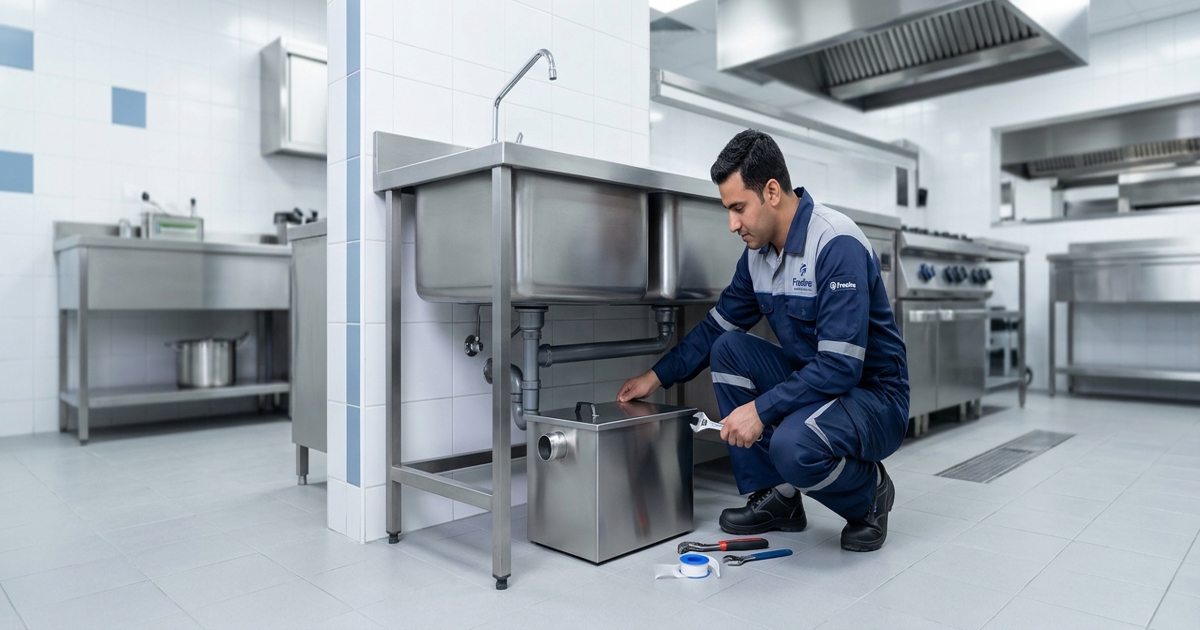
Grease Trap Installation in Abu Dhabi: A Complete Guide
Grease trap installation in Abu Dhabi is no longer optional for commercial kitchens, restaurants, and food processing facilities. It is a regulatory requirement and a practical necessity. Without a properly installed grease trap, fats, oils, and grease (FOG) enter your drainage system, causing blockages, foul odors, and costly repairs. If you are a restaurant owner, facility manager, or property developer in Abu Dhabi, this guide will walk you through everything you need to know about grease trap installation, maintenance, and compliance.
Key Takeaways
- Grease trap installation in Abu Dhabi is mandatory for commercial kitchens and food service businesses under UAE plumbing and drainage regulations.
- Proper installation by qualified building maintenance services ensures long-term system efficiency and regulatory compliance.
- Regular maintenance and cleaning are critical to prevent drainage failures, fines, and operational disruptions.
- Choosing the right grease trap size and material, whether PVC or stainless steel, affects both performance and cost.
Why Grease Trap Installation in Abu Dhabi Matters
Every commercial kitchen in Abu Dhabi produces significant amounts of grease and oil during daily operations. When these substances enter the municipal drainage system, they solidify and cause severe pipe blockages. Local authorities in Abu Dhabi and across the UAE require commercial establishments to install and maintain grease traps to protect the public drainage infrastructure. Failing to install a grease trap can result in regulatory penalties, operational shutdowns, and expensive drain cleaning bills. More importantly, a poorly maintained drainage system creates hygiene and safety risks for your kitchen staff and customers. Investing in a quality grease trap installation in Abu Dhabi protects your business, your reputation, and your bottom line. According to the Abu Dhabi Department of Municipalities and Transport, all food service establishments must comply with drainage and wastewater management standards. These standards include the mandatory installation of grease traps sized appropriately for the volume of kitchen operations.How Grease Traps Work and Why Sizing Matters
A grease trap is a plumbing device designed to intercept most greases and solids before they enter the wastewater disposal system. Wastewater from sinks and cooking equipment flows into the trap, where grease floats to the top and heavier solids sink to the bottom. The clarified water in the middle then flows out into the drainage line. Sizing is one of the most critical factors in effective grease trap installation. An undersized trap fills up quickly, reducing its efficiency and requiring more frequent cleaning. An oversized trap can lead to grease solidifying before it can be removed. The correct size depends on your kitchen’s flow rate, the number of meals served daily, and the types of food prepared. For professional guidance on choosing between PVC and stainless steel units, read this detailed breakdown: Choosing the Right Grease Trap for Your Need: PVC vs Stainless Steel Grease Trap.The Role of Building Maintenance Services in Grease Trap Installation
Professional building maintenance services play a central role in ensuring that grease trap installations are done correctly and safely. A qualified maintenance team will assess your kitchen layout, measure flow rates, recommend the right trap size, and install the unit in compliance with local plumbing codes. Working with experienced facility management services also means you get ongoing support after installation. This includes scheduled inspections, cleaning, and documentation that you may need for regulatory audits. Freeline Maintenance and Services LLC provides comprehensive building maintenance solutions across the UAE, helping businesses stay compliant and operational at all times. Attempting a DIY installation or hiring an unqualified contractor may save money in the short term. However, improper installation leads to system failures, drainage overflows, and potential fines from the municipality. The expertise of a licensed team is well worth the investment.Grease Trap Maintenance: What Every Business Owner Must Know
Installation is only the beginning. Regular maintenance is what keeps your grease trap functioning at peak efficiency. Industry standards recommend cleaning grease traps every one to three months, depending on kitchen volume. High-volume restaurants may need monthly servicing. Signs that your grease trap needs immediate attention include slow drains, foul smells from kitchen sinks, and visible grease overflow near your drainage area. Ignoring these warning signs leads to complete drain blockages, which can shut down your kitchen operations entirely. Freeline also offers professional grease trap cleaning services tailored to restaurants and commercial kitchens. Scheduling routine maintenance as part of your annual facility management plan keeps your operations running smoothly and helps you avoid emergency call-outs. For businesses looking to reduce long-term costs, understanding how regular cleaning impacts operational expenses is essential. Learn more at Reduce Operational Expenses with Grease Trap Cleaning.Plumbing Compliance and the Role of a Qualified Plumbing Company
Grease trap installation is directly tied to your overall plumbing infrastructure. A licensed plumbing company in Dubai or Abu Dhabi will ensure that your grease trap is connected correctly to your kitchen drainage system and meets local plumbing standards. This includes proper venting, correct pipe gradients, and secure fittings that prevent leaks and overflows. Freeline provides expert plumbing services across the UAE, supporting both new installations and upgrades to existing systems. Whether you are setting up a new restaurant, renovating a commercial kitchen, or replacing an outdated grease trap, a qualified plumbing team ensures everything is connected properly and documented for compliance. The Trakhees regulatory authority in the UAE also provides guidelines for commercial plumbing installations, including grease trap requirements for food service establishments in free zones and commercial areas. Staying updated on these guidelines is part of responsible facility management.Choosing the Right Service Provider for Grease Trap Installation in Abu Dhabi
Not all maintenance companies offer the same level of expertise or service quality. When selecting a provider for grease trap installation in Abu Dhabi, look for the following:- Licensed and experienced plumbing and maintenance professionals
- Knowledge of local UAE regulatory requirements for FOG management
- Ability to supply and install both PVC and stainless steel grease traps
- Ongoing maintenance and cleaning support after installation
- Transparent pricing and clear service agreements
- Experience with both residential and commercial properties
