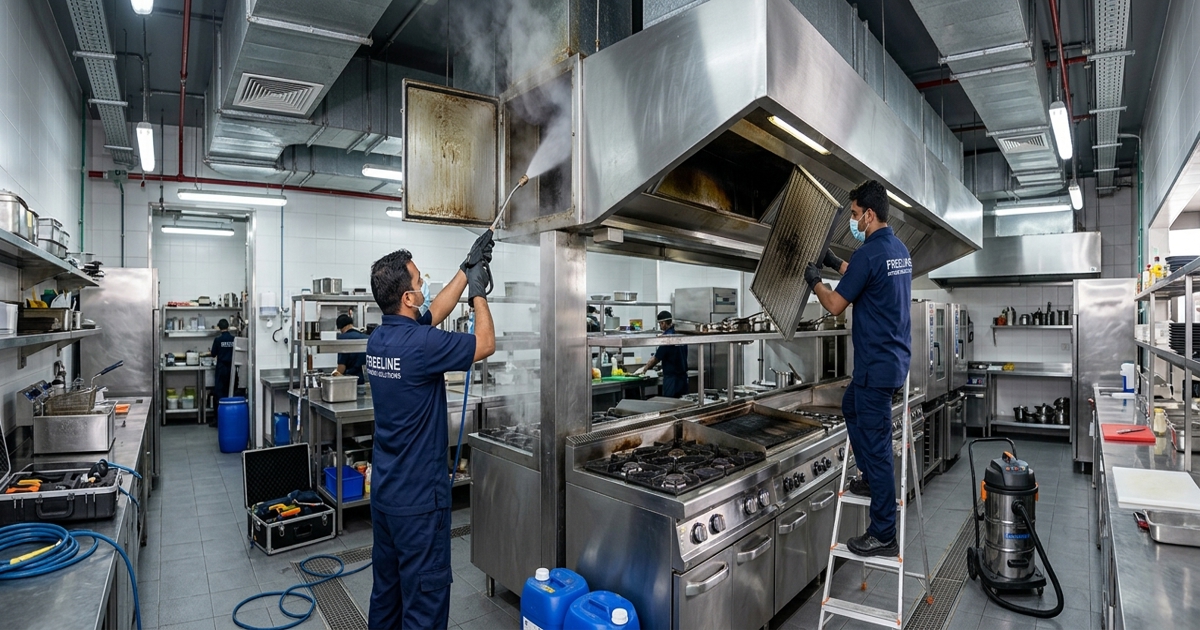
Inside a Commercial Kitchen Duct Cleaning Job: How Freeline Gets It Done
Commercial Kitchen Duct Cleaning Dubai: A Real Service Visit Walkthrough
Commercial kitchen duct cleaning in Dubai is not a simple wipe-down job. It requires trained technicians, specialized equipment, and a structured process that follows fire safety and hygiene standards. Yet many restaurant and facility managers are unsure what actually happens during a professional service visit. This blog walks you through a real Freeline job from start to finish, so you understand every step of the process and why each one matters for your kitchen’s safety and performance.Key Takeaways
- Commercial kitchen duct cleaning in Dubai involves a multi-step process including inspection, degreasing, pressure washing, and a final safety check that protects your business from fire risk and regulatory penalties.
- Freeline covers the entire exhaust pathway from hood filters to the rooftop fan, delivering fully documented restaurant kitchen duct cleaning in Dubai with before-and-after photographic reports.
- Regular kitchen hood cleaning in Dubai is legally required under Dubai municipality and civil defense regulations and is the primary method recommended for preventing commercial kitchen fires.
Step 1: The Pre-Job Site Inspection
Every Freeline service visit starts with a thorough inspection before any equipment is unpacked. The technician examines the full exhaust system, including the hood, filters, duct runs, fan housing, and rooftop exhaust point. This helps identify grease accumulation hotspots, damaged components, and any access restrictions that could affect the cleaning method. During this phase, the technician also reviews the kitchen layout and cooking volume. A high-output commercial kitchen running deep fryers and charbroilers will have far heavier grease deposits than a catering prep kitchen. This information directly shapes the cleaning approach and the chemical concentrations used. Nothing is assumed. Everything is assessed first. Freeline documents this inspection with photographs and written notes. These records become part of the service report handed to the client at job completion. For facility managers handling kitchen exhaust hood cleaning compliance, this documentation is essential for regulatory audits.Step 2: Protecting the Kitchen Before Work Begins
Once the inspection is complete, the team prepares the kitchen for the cleaning process. All cooking equipment directly beneath the hood is covered with heavy-duty plastic sheeting. This prevents grease and cleaning chemicals from contaminating food prep surfaces, fryers, or open flame units below. Floor drains are also checked to confirm they can handle the wastewater from the wash-down process. The team sets up containment around the base of the hood and the duct access panels. This step is often overlooked by inexperienced contractors, but it is critical for preventing secondary contamination in a live kitchen environment. Ventilation within the kitchen space is also assessed. In some cases, temporary ventilation is introduced to manage fumes from the cleaning agents during the job. Freeline treats every kitchen as an active food business environment, even when the job happens outside of service hours.Step 3: Filter Removal and Initial Degreasing
With the kitchen protected, the technicians remove all grease filters from the hood. These are soaked in a hot alkaline degreasing solution that breaks down the hardened grease and carbonized residue that accumulates from daily cooking. This soaking process typically runs for 20 to 40 minutes depending on the level of buildup. While the filters soak, the interior of the hood canopy is treated with a heavy-duty degreasing spray. The chemical is applied and allowed to dwell on the surface before scrubbing begins. This dwell time is critical. Rushing past it leads to incomplete grease removal, which is a common shortcut taken by lower-quality contractors. Thorough kitchen exhaust cleaning in Dubai requires patience and the right chemistry working together. According to guidance from organizations like the National Fire Protection Association, grease accumulation in kitchen exhaust systems is one of the leading causes of commercial kitchen fires. Regular professional cleaning is the primary prevention method recommended by fire safety authorities globally.Step 4: High-Pressure Duct Washing
This is the most technically demanding stage of any commercial kitchen duct cleaning job in Dubai. After the hood interior is scrubbed clean, the team moves to the duct runs themselves. Access panels are opened at multiple points along the duct to allow the technician to work the full length of the system. A high-pressure hot water system is used to flush grease and residue through the duct toward collection points. The water temperature and pressure levels are calibrated based on the duct material and the volume of grease present. Stainless steel ducts and galvanized steel ducts require slightly different approaches to avoid surface damage while still achieving full degreasing. The exhaust fan housing at the rooftop is cleaned separately. Fan blades are wiped down, the fan housing interior is flushed, and the rooftop grease collection tray is emptied and cleaned. This part of the job is often skipped entirely in basic cleaning services, but it is where grease accumulation poses the highest fire risk. Freeline covers the full system, not just the visible hood. You can read more about how professional kitchen hood cleaning in Dubai addresses these hidden risks in the complete kitchen hood cleaning maintenance guide on our site.Step 5: Reassembly, Final Inspection, and Service Report
After the cleaning and flush-down are complete, the filters are reinstalled after a final rinse and air dry check. All access panels are resealed. The kitchen protection sheeting is carefully removed and disposed of off-site. The technician then runs the exhaust system at full speed to confirm airflow is restored and the fan operates without vibration or noise. A post-clean inspection walks through every section that was treated. The technician photographs the cleaned surfaces at the same angles used during the pre-job inspection. This before-and-after documentation is included in the final service report, which notes the date of service, technician details, areas covered, and the recommended next service interval based on the cooking output of the kitchen. For restaurant operators managing restaurant kitchen duct cleaning in Dubai as part of broader facility maintenance, this report is also a useful record for insurance documentation and municipal inspection requirements. Professional standards for commercial kitchen exhaust maintenance are also referenced by bodies such as the American Society of Heating, Refrigerating and Air-Conditioning Engineers, whose ventilation guidelines inform best practices adopted in the UAE commercial food sector.Why Freeline Approaches Commercial Kitchen Duct Cleaning Differently
Many contractors offer a surface-level clean that addresses only what is visible. Freeline’s approach covers the entire exhaust pathway, from the hood filters down through the duct runs to the rooftop fan. Every stage is documented, and the client receives a complete service record at the end of each visit. The team also advises kitchen managers on cleaning frequency based on actual cooking output. A busy restaurant running multiple shifts needs more frequent service than a corporate office canteen. This tailored approach ensures that kitchen hood cleaning in Dubai is scheduled at intervals that genuinely reduce risk rather than simply meeting a minimum contractual requirement. Freeline’s technicians are trained specifically in commercial kitchen exhaust systems. The equipment used, including high-pressure hot water units and chemical degreasing agents rated for food-adjacent environments, is selected for performance and safety. Additionally, businesses that want to understand how grease management integrates with broader kitchen hygiene systems can explore options around grease trap suppliers in Dubai and kitchen hood cleaning for a fuller picture of commercial kitchen hygiene management.Conclusion
Commercial kitchen duct cleaning in Dubai is a multi-stage, technically precise job that protects your business from fire risk, regulatory penalties, and equipment failure. The Freeline process covers every section of your exhaust system, from the filters and hood canopy to the duct runs and rooftop fan. Each visit is fully documented so you have the records you need for inspections and insurance. If your kitchen is overdue for a professional service, or if you want to understand what a proper clean actually involves, contact the Freeline team to schedule a site assessment and get a clear service plan tailored to your kitchen’s output and layout.Most commercial kitchens in Dubai require kitchen exhaust cleaning every three to six months. High-volume restaurants running multiple shifts daily may need quarterly service. The correct frequency depends on cooking type and volume. A professional technician can assess your system and recommend the right interval for your operation.
A professional service covers filter removal and degreasing, hood canopy scrubbing, full duct run washing, exhaust fan cleaning at the rooftop, and a final airflow test. Freeline also provides before-and-after photographic documentation and a written service report for each completed visit.
Yes. Dubai municipality and civil defense regulations require commercial kitchens to maintain clean exhaust systems as part of fire safety compliance. Failure to maintain clean ducts can result in fines, business license issues, or failed inspections. Regular documented cleaning is the standard way to meet these requirements.
Most commercial kitchen duct cleaning jobs in Dubai take between two and six hours depending on kitchen size, duct length, and grease accumulation levels. Larger restaurant chains or hotel kitchens with extended duct systems may require more time. Freeline provides a time estimate after the initial site inspection.
Yes. Grease buildup inside exhaust ducts is a primary cause of commercial kitchen fires. Regular restaurant kitchen duct cleaning in Dubai removes accumulated grease before it reaches ignition risk levels. Businesses that maintain clean exhaust systems through professional services significantly reduce the likelihood of fire-related incidents and insurance claims.
Professional technicians use alkaline degreasing agents formulated for food-adjacent commercial environments. These chemicals break down hardened grease and carbonized residue without damaging duct materials. The cleaning agents used by Freeline are selected for effectiveness and safety, and all wastewater is contained and managed appropriately during the job.
Yes. Freeline provides a full service report at the end of every visit. The report includes before-and-after photographs, areas cleaned, technician details, date of service, and the recommended next service interval. This documentation supports effective kitchen hood cleaning practices and is useful for regulatory audits and insurance records.
Signs include visible grease dripping from hood edges, reduced airflow from the exhaust fan, strong lingering cooking odors after service hours, and discoloration or residue on duct surfaces near access panels. If you notice any of these, schedule a professional kitchen exhaust cleaning in Dubai as soon as possible to prevent further buildup.
Yes. Freeline handles a range of commercial kitchen ventilation systems. For businesses using ecology units, which combine electrostatic filtration with UV systems, specialized kitchen ecology unit cleaning and maintenance in the UAE is available as a dedicated service separate from standard duct cleaning visits.
Freeline covers the full exhaust system pathway from filters to rooftop fan rather than cleaning only visible surfaces. Every job is fully documented with photographs and a written report. Technicians are trained in commercial kitchen exhaust systems, and cleaning schedules are tailored to each kitchen’s actual cooking output and operational demands.
