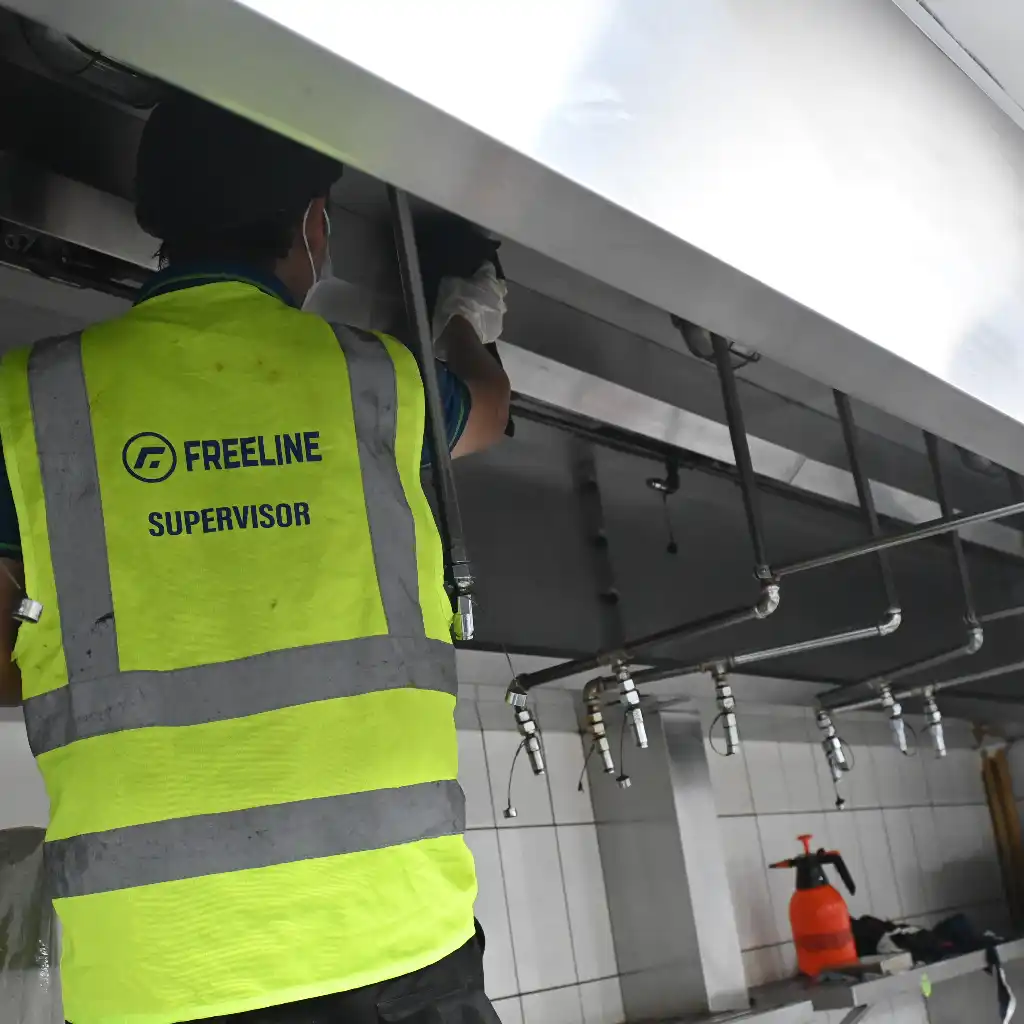
Importance of Kitchen Duct Cleaning for Fire Safety & Hygiene in Commercial Kitchens
Introduction
Every commercial kitchen in the UAE operates under intense heat, smoke, and grease all of which travel straight into your ductwork. Without regular kitchen duct cleaning in Dubai, that grease builds up silently inside exhaust ducts and becomes one of the most serious fire hazards in any restaurant or food facility. Beyond fire risk, neglected ducts harbor bacteria, foul odors, and air quality problems that put both staff and customers at risk. This guide explains exactly why clean ducts are non-negotiable for fire safety, regulatory compliance, and kitchen hygiene.
Key Takeaways
- Grease accumulation inside kitchen ducts is a leading cause of commercial kitchen fires in the UAE.
- Regular kitchen duct cleaning in Dubai helps restaurants stay compliant with Dubai Civil Defence and NFPA 96 fire safety standards.
- Clean ducts improve ventilation efficiency, indoor air quality, and overall kitchen hygiene for both staff and diners.
Why Grease Buildup in Kitchen Ducts Is a Serious Fire Hazard
Grease accumulation inside exhaust ducts does not just affect air quality it is a direct fire risk that can shut your business down permanently.
Every time food is cooked on an open flame or grill, aerosolized grease particles rise with the hot air and coat the interior walls of your exhaust duct system. Over weeks and months, this film thickens into a dense, highly flammable layer. A single spark or high-temperature surge both common in busy commercial kitchens is enough to ignite this residue. Once a duct fire starts, it travels rapidly through the entire ventilation system, reaching areas that are nearly impossible to access in an emergency. According to the National Fire Protection Association (NFPA), failure to clean cooking equipment, including ducts and hoods, is one of the top causes of restaurant fires globally. This is precisely why kitchen duct cleaning in Dubai is not optional it is a critical safety obligation.
Dubai Civil Defence Compliance and NFPA 96 Standards
Commercial kitchens in the UAE are required to follow strict fire safety regulations, and non-compliance carries real legal and financial consequences.
Dubai Civil Defence enforces fire safety inspections for all food service establishments. The internationally recognised NFPA 96 standard which governs ventilation control and fire protection of commercial cooking operations sets clear guidelines for how often kitchen exhaust systems must be cleaned. High-volume operations such as 24-hour restaurants may require quarterly cleaning, while moderate-use kitchens typically need cleaning every six months. Failure to meet these standards can result in fines, forced closure, or voided insurance coverage. Professional restaurant duct cleaning services provide documented inspection reports after every service visit proof of compliance that you can present during official audits. Pairing your duct cleaning schedule with a routine kitchen hood cleaning programme ensures your entire exhaust system meets regulatory requirements end-to-end.
The Direct Impact on Kitchen Hygiene and Food Safety
A dirty duct system does not just create fire risk it actively contaminates your kitchen environment and compromises food safety.
Grease-coated ducts are breeding grounds for bacteria, mould, and other pathogens. When your ventilation system fails to remove smoke, steam, and airborne contaminants efficiently, these pollutants recirculate back into the kitchen. Staff inhale poor-quality air throughout their shifts, increasing fatigue and health risks. More critically, airborne contaminants can settle on food preparation surfaces, uncovered ingredients, and cooking utensils a direct food safety violation. Commercial kitchen ventilation cleaning removes these biological and chemical contaminants, restoring proper airflow and ensuring that your kitchen meets municipal hygiene standards. Restaurants that prioritise commercial kitchen ventilation cleaning consistently report fresher working environments, fewer odor complaints, and improved staff wellbeing.
How Professional Kitchen Exhaust Cleaning UAE Services Work
Understanding the cleaning process helps kitchen managers appreciate the value of professional service over DIY attempts.
A qualified kitchen exhaust cleaning UAE provider follows a systematic process. The team begins with a full inspection of the hood, filters, duct interior, exhaust fan, and access panels to assess grease levels and any structural concerns. Filters are removed and degreased thoroughly using food-safe chemical agents. The duct interior is then cleaned using specialist brushes, scrapers, and high-pressure equipment, depending on the duct geometry and grease depth. All grease is collected and disposed of responsibly to avoid drain blockages or environmental hazards. After cleaning, a post-service inspection confirms that the system is clear, and a compliance certificate is issued. For kitchens dealing with heavy grease output, this process may also involve checking the condition of grease traps to ensure the full waste management chain is functioning correctly. Technicians also check ecology units, which play a key role in filtering odors and airborne grease before they enter the duct learn more about kitchen ecology unit cleaning in Dubai to keep your full exhaust system performing at its best.
How Often Should You Schedule Kitchen Duct Cleaning in Dubai?
Cleaning frequency depends on the volume and type of cooking your kitchen handles each day.
The NFPA 96 standard provides a practical framework. Kitchens that operate continuously such as hotel kitchens, hospital canteens, and large restaurant chains should schedule cleaning every one to three months. Standard restaurants and cafeterias typically require cleaning every six months, while seasonal or low-volume operations may manage with an annual clean. Dubai’s hot and humid climate accelerates grease oxidation and bacterial growth inside ducts, which means UAE-based operators should err toward more frequent cleaning rather than less. Scheduling regular restaurant duct cleaning services protects your kitchen year-round and avoids the costly reactive repairs that come from neglect.
Conclusion
Kitchen duct cleaning in Dubai is one of the most important and most overlooked maintenance responsibilities in any commercial food operation. Grease accumulation is a silent danger that escalates from a hygiene issue into a genuine fire emergency when left unaddressed. Regular professional cleaning protects your staff, your customers, your property, and your operating licence. It ensures compliance with Dubai Civil Defence regulations and NFPA 96 standards while keeping your kitchen running efficiently and safely. If your last duct clean was more than six months ago, it is time to act. Contact Freeline today to schedule a professional kitchen duct cleaning service and keep your commercial kitchen safe, compliant, and spotless.
Kitchen duct cleaning involves removing grease, smoke residue, and contaminants from exhaust duct systems in commercial kitchens. In Dubai, it is essential for fire safety compliance, food hygiene standards, and meeting Dubai Civil Defence and NFPA 96 regulations. Neglected ducts are a leading cause of commercial kitchen fires.
NFPA 96 recommends cleaning every 1–3 months for high-volume kitchens, every 6 months for moderate-use operations, and annually for low-volume kitchens. Given Dubai’s heat and humidity, operators in the UAE should lean toward more frequent cleaning intervals to prevent accelerated grease buildup.
Yes. Dubai Civil Defence enforces fire safety inspections that include ventilation and exhaust systems. Commercial kitchens must comply with NFPA 96 standards, which mandate regular cleaning of hoods, ducts, and exhaust fans. Failure to comply can result in fines, operational shutdowns, or voided insurance.
Uncleaned ducts accumulate highly flammable grease layers that can ignite during normal cooking operations. Beyond fire risk, blocked or dirty ducts cause poor ventilation, bad odors, increased energy consumption, and contamination of the kitchen environment, all of which affect staff health and food safety.
The duration depends on duct size, grease level, and system complexity. A standard commercial kitchen duct clean typically takes between 3 to 8 hours. High-volume kitchens with extensive duct networks may require longer sessions or multiple visits to complete the work to compliance standards.
Kitchen hood cleaning focuses on the canopy, filters, and visible hood surfaces directly above cooking equipment. Kitchen duct cleaning covers the internal ductwork that channels exhaust air to the outside. Both are required for full compliance, the hood collects grease first, but residue continues to build up inside the ducts beyond.
Yes. Grease-clogged ducts restrict airflow, forcing exhaust fans to work harder and consume more electricity. Professional commercial kitchen ventilation cleaning restores full airflow capacity, reducing the load on fans and motors, which lowers energy bills and extends equipment lifespan.
A professional kitchen exhaust cleaning UAE company should carry valid trade licences, technical certifications aligned with NFPA 96, and should provide post-service compliance documentation. Freeline UAE provides certified services with full documentation to support your compliance audits.
Yes. A thorough restaurant duct cleaning service includes inspection and cleaning of the exhaust fan blades, motor housing, and fan casing. Grease-coated fan blades reduce airflow efficiency and create additional fire risk, so they are always addressed as part of a complete duct cleaning programme.
Key warning signs include visible grease dripping from hood filters, persistent cooking odors in dining areas, reduced airflow from vents, unusual fan noise, or a failed fire safety inspection. If any of these are present, schedule kitchen duct cleaning in Dubai immediately to avoid escalating risk.
