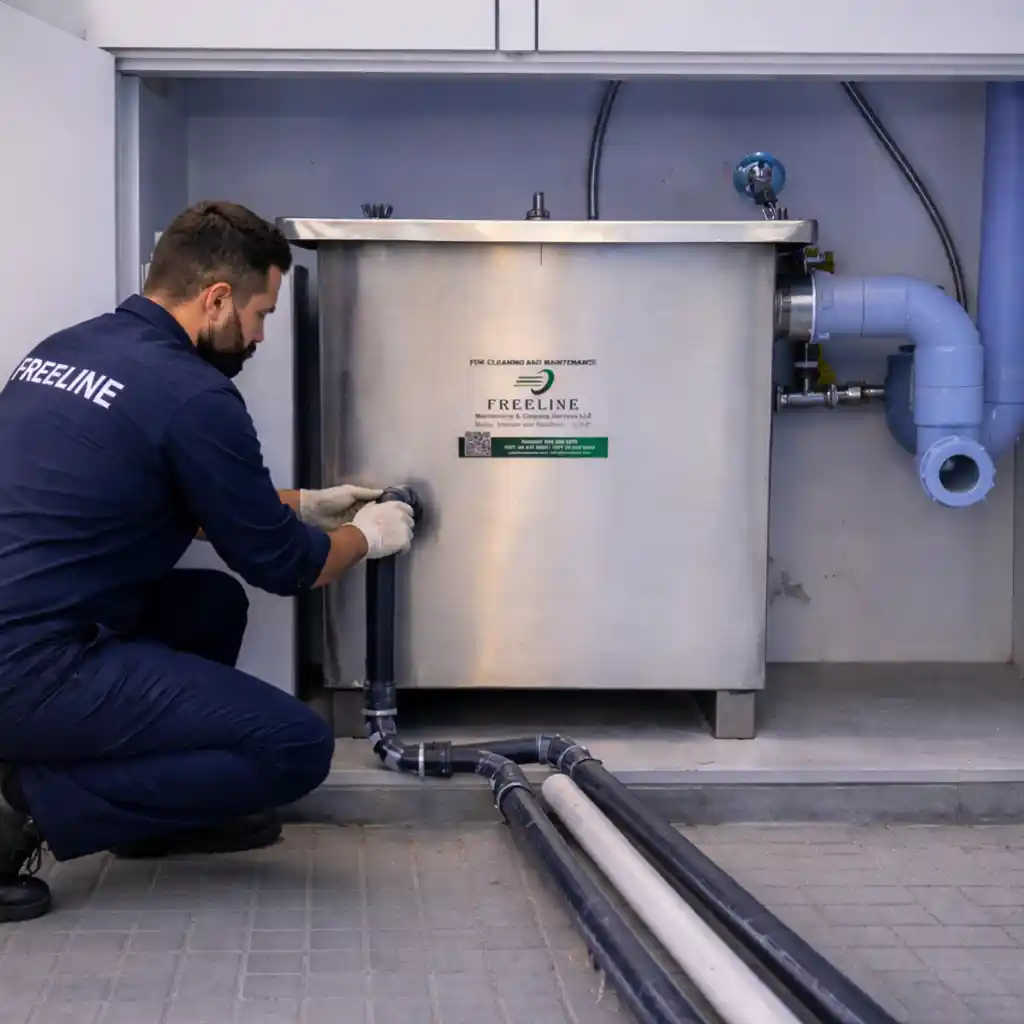
Grease Trap Installation Guide: Protect Your Commercial Kitchen Plumbing
Running a commercial kitchen in Dubai without a properly installed grease trap is not just a maintenance risk it is a compliance failure waiting to happen. Grease trap installation in Dubai is a legal requirement for restaurants, hotels, cafeterias, and food processing facilities under Dubai Municipality regulations. Yet many business owners underestimate just how critical the right installation is. This guide walks you through everything you need to know from choosing the correct size and type, to meeting local compliance standards so your kitchen plumbing stays protected and your business stays operational.
Key Takeaways
- Grease trap installation in Dubai is mandatory for all commercial food establishments under Dubai Municipality and UAE environmental standards.
- Choosing the wrong size or type of grease trap leads to frequent blockages, foul odours, and costly emergency repairs.
- Correct installation by a certified professional ensures long-term performance, regulatory compliance, and protection of your commercial kitchen plumbing.
What Is a Grease Trap and Why Does Your Kitchen Need One?
A grease trap also called a grease interceptor — is a plumbing device designed to capture fats, oils, and grease (FOG) before they enter the municipal drainage system. Without one, FOG solidifies inside drain pipes and sewer lines, causing severe blockages, backflows, and expensive damage to both your kitchen and public infrastructure.
Understanding the role of grease traps in commercial kitchens is the first step toward protecting your plumbing system. Every sink, dishwasher, and cooking appliance in your kitchen produces FOG-laden wastewater. A correctly installed grease trap intercepts that wastewater, allows grease to separate and float to the top, and lets relatively clean water flow through to the drain. This simple mechanism prevents a chain of problems that can shut down your entire operation.
Dubai Municipality Requirements for Grease Trap Installation
Dubai has strict regulations governing FOG management in commercial food establishments, and non-compliance carries serious consequences.
Dubai Municipality mandates that all food and beverage establishments install approved grease traps or grease interceptors before connecting to the municipal sewage network. Inspections are carried out periodically, and businesses found operating without a properly installed and maintained grease trap face fines, operational suspensions, or licence revocations. For restaurant operators, restaurant compliance in Dubai is not optional — it directly affects your ability to stay open.
Key regulatory requirements include:
- Grease traps must be sized according to the kitchen’s peak flow rate and meal volume.
- Installations must use approved materials that meet Dubai Municipality standards.
- Regular cleaning and maintenance records must be available for inspection.
- All grease trap installation work must be carried out by a licensed contractor.
Partnering with an experienced team for grease trap supply and installation in Dubai ensures your setup meets all applicable codes from day one, saving you the cost and hassle of retrofits or penalties.
How to Choose the Right Grease Trap Size for Your Commercial Kitchen
Selecting the correct grease trap capacity is one of the most important decisions in the installation process. An undersized unit will overflow rapidly, creating foul odours and drainage failures. An oversized unit may be unnecessarily expensive and difficult to maintain.
The sizing of a grease trap is calculated based on several factors, including the number of meals served per day, the types of cooking performed (deep frying produces far more FOG than salad preparation), the number and type of kitchen fixtures connected to the trap, and the expected peak flow rate in litres per minute. A rule of thumb used in the industry is to calculate the total capacity of all connected sinks and appliances, then apply a sizing formula to determine the minimum grease trap volume in litres.
For most small to mid-sized restaurants in Dubai, units between 500 and 1,500 litres are common. Large-scale operations such as hotel kitchens or catering facilities may require custom-engineered grease interceptor installation UAE solutions with capacities exceeding 3,000 litres. Always consult a certified plumbing professional to carry out the calculation rather than guessing the cost of getting it wrong far outweighs the cost of a proper assessment.
Step-by-Step Grease Trap Installation Process
Understanding what the installation process involves helps you prepare your kitchen and timeline effectively.
- Site Assessment and Planning A qualified engineer surveys your kitchen layout, drainage plan, and local connection points. This determines whether an indoor under-sink unit or an outdoor in-ground interceptor is the right fit for your space.
- Selecting the Unit Based on the site assessment and sizing calculation, the appropriate grease trap model is selected. Materials typically used include fibreglass, polyethylene (HDPE), or concrete for larger in-ground systems.
- Excavation and Positioning (For In-Ground Units) For outdoor grease interceptors, excavation is required. The unit is positioned at the correct depth to allow gravity-fed flow from the kitchen outlet.
- Connecting to Kitchen Plumbing Inlet and outlet pipes are connected following the correct gradient to ensure proper flow. Baffles are installed inside the trap to improve grease separation efficiency.
- Testing and Commissioning Once installation is complete, the system is tested with water flow to verify that grease separation is working correctly and that there are no leaks or drainage issues. Documentation is prepared for Dubai Municipality compliance records.
Working with qualified professionals who offer comprehensive commercial kitchen plumbing solutions ensures every step meets the technical standard required for long-term, trouble-free operation.
Common Grease Trap Installation Mistakes to Avoid
Even well-intentioned installations can fail if common errors are made during planning or execution.
Incorrect pipe gradient is one of the most frequent problems. Pipes connected to the grease trap must slope at the correct angle typically 1:40 to allow wastewater to flow freely. Too steep and solids rush through without settling; too flat and blockages form quickly.
Placing the trap too far from the kitchen is another issue. The longer the distance between the cooking area and the grease trap inlet, the more likely grease is to cool and solidify in the pipe before even reaching the unit. Best practice is to position the trap as close to the source as possible.
Using the wrong trap type for the installation environment is also a costly mistake. Indoor under-sink traps are not designed for the volumes produced by a busy restaurant kitchen. Conversely, specifying an oversized in-ground interceptor for a small café creates unnecessary maintenance burdens and expense.
Finally, neglecting maintenance planning during installation is a mistake that compounds over time. Your grease trap should be designed with easy access for cleaning in mind. If the access lids are difficult to reach or the unit is not positioned for a tanker vehicle, your cleaning team will struggle and cleaning intervals will be skipped. According to Dubai Municipality’s FOG management guidelines, commercial grease traps should be pumped and cleaned on a schedule appropriate to the volume of FOG produced, typically every 30 to 90 days for active restaurant kitchens.
Maintaining Your Grease Trap After Installation
Installation is just the beginning. A grease trap that is not regularly maintained quickly becomes a liability. Grease accumulates in the trap over time, reducing its effective capacity and eventually causing overflows and drain backups. Odour problems are often the first sign that a trap is overdue for cleaning.
Professional grease trap cleaning services in Dubai use specialist vacuum tankers to pump out accumulated FOG, clean the internal baffles, and inspect the unit for damage or deterioration. Regular servicing not only protects your drainage system but also extends the working life of the trap itself.
For a detailed breakdown of how to keep your unit in top condition between professional cleans, refer to our grease trap maintenance tips for Dubai restaurants and cafes. Combining good daily kitchen practices such as scraping plates and pots before washing with scheduled professional servicing creates the most effective FOG management system for any commercial kitchen.
If your drainage system is already experiencing slow flow or partial blockages alongside your grease trap issues, it may also be worth considering a professional drain line jetting service to clear any existing FOG build-up from your pipe network before commissioning a new trap.
Conclusion
Proper grease trap installation in Dubai is a non-negotiable part of running a compliant, efficient, and sustainable commercial kitchen. From selecting the right size and type to following Dubai Municipality regulations and maintaining the system on schedule, every step matters. Shortcuts at the installation stage lead to operational problems, compliance failures, and costly repairs down the line. Investing in a professionally installed, correctly sized grease trap and keeping it well maintained is the smartest protection you can give your kitchen plumbing and your business.
At Freeline Maintenance & Services LLC, we provide expert grease trap supply, installation, and maintenance across Dubai and the UAE. Contact us today to get a site assessment and ensure your kitchen is fully compliant and protected.
Yes. Dubai Municipality requires all commercial food establishments to install an approved grease trap or grease interceptor before connecting to the municipal sewer network. Operating without one can result in fines, suspension, or licence cancellation.
Grease trap sizing is calculated based on your kitchen’s peak wastewater flow rate, the number of meals served daily, and the types of cooking performed. A licensed plumber or engineer should carry out the calculation to ensure compliance with Dubai Municipality standards.
A grease trap is typically a smaller, indoor unit installed under the sink, suited for low-volume kitchens. A grease interceptor is a larger, in-ground unit installed outside, designed to handle the high FOG volumes produced by busy restaurant or hotel kitchens.
Most active commercial kitchens in Dubai require grease trap cleaning every 30 to 90 days, depending on the volume of FOG produced. Dubai Municipality may specify a minimum cleaning frequency, and records should be maintained for inspection purposes.
No. Grease trap installation in Dubai must be carried out by a licensed contractor. DIY installation does not meet regulatory requirements and will not pass Dubai Municipality inspections.
A neglected grease trap fills with accumulated FOG, causing drainage backups, foul odours, and potential blockages in the municipal sewer line. This can lead to regulatory fines and expensive emergency plumbing repairs for your business.
Commercial grease traps used in the UAE are typically made from fibreglass, high-density polyethylene (HDPE), or reinforced concrete for large in-ground interceptors. The material choice depends on the installation environment and required capacity.
For a standard indoor unit, installation typically takes one to two days. Larger in-ground interceptors requiring excavation may take three to five days depending on site conditions and the complexity of the drainage connection.
Signs that a grease trap may need replacement include persistent foul odours despite regular cleaning, visible cracks or structural damage to the unit, recurring drainage backflows, and reduced separation efficiency. A professional inspection can confirm whether repair or replacement is needed.
Yes. Freeline Maintenance & Services LLC provides grease trap supply and installation across Dubai, Abu Dhabi, and the wider UAE. Our team handles everything from site assessment and sizing to installation, testing, and ongoing maintenance support.
