Importance of Kitchen Duct Cleaning for Fire Safety & Hygiene in Commercial Kitchens
Introduction

Every commercial kitchen in the UAE operates under intense heat, smoke, and grease all of which travel straight into your ductwork. Without regular kitchen duct cleaning in Dubai, that grease builds up silently inside exhaust ducts and becomes one of the most serious fire hazards in any restaurant or food facility. Beyond fire risk, neglected ducts harbor bacteria, foul odors, and air quality problems that put both staff and customers at risk. This guide explains exactly why clean ducts are non-negotiable for fire safety, regulatory compliance, and kitchen hygiene.

Key Takeaways

  • Grease accumulation inside kitchen ducts is a leading cause of commercial kitchen fires in the UAE.
  • Regular kitchen duct cleaning in Dubai helps restaurants stay compliant with Dubai Civil Defence and NFPA 96 fire safety standards.
  • Clean ducts improve ventilation efficiency, indoor air quality, and overall kitchen hygiene for both staff and diners.

Why Grease Buildup in Kitchen Ducts Is a Serious Fire Hazard

Grease accumulation inside exhaust ducts does not just affect air quality it is a direct fire risk that can shut your business down permanently.

Every time food is cooked on an open flame or grill, aerosolized grease particles rise with the hot air and coat the interior walls of your exhaust duct system. Over weeks and months, this film thickens into a dense, highly flammable layer. A single spark or high-temperature surge both common in busy commercial kitchens is enough to ignite this residue. Once a duct fire starts, it travels rapidly through the entire ventilation system, reaching areas that are nearly impossible to access in an emergency. According to the National Fire Protection Association (NFPA), failure to clean cooking equipment, including ducts and hoods, is one of the top causes of restaurant fires globally. This is precisely why kitchen duct cleaning in Dubai is not optional it is a critical safety obligation.

Dubai Civil Defence Compliance and NFPA 96 Standards

Commercial kitchens in the UAE are required to follow strict fire safety regulations, and non-compliance carries real legal and financial consequences.

Dubai Civil Defence enforces fire safety inspections for all food service establishments. The internationally recognised NFPA 96 standard which governs ventilation control and fire protection of commercial cooking operations sets clear guidelines for how often kitchen exhaust systems must be cleaned. High-volume operations such as 24-hour restaurants may require quarterly cleaning, while moderate-use kitchens typically need cleaning every six months. Failure to meet these standards can result in fines, forced closure, or voided insurance coverage. Professional restaurant duct cleaning services provide documented inspection reports after every service visit proof of compliance that you can present during official audits. Pairing your duct cleaning schedule with a routine kitchen hood cleaning programme ensures your entire exhaust system meets regulatory requirements end-to-end.

The Direct Impact on Kitchen Hygiene and Food Safety

A dirty duct system does not just create fire risk it actively contaminates your kitchen environment and compromises food safety.

Grease-coated ducts are breeding grounds for bacteria, mould, and other pathogens. When your ventilation system fails to remove smoke, steam, and airborne contaminants efficiently, these pollutants recirculate back into the kitchen. Staff inhale poor-quality air throughout their shifts, increasing fatigue and health risks. More critically, airborne contaminants can settle on food preparation surfaces, uncovered ingredients, and cooking utensils a direct food safety violation. Commercial kitchen ventilation cleaning removes these biological and chemical contaminants, restoring proper airflow and ensuring that your kitchen meets municipal hygiene standards. Restaurants that prioritise commercial kitchen ventilation cleaning consistently report fresher working environments, fewer odor complaints, and improved staff wellbeing.

How Professional Kitchen Exhaust Cleaning UAE Services Work

Understanding the cleaning process helps kitchen managers appreciate the value of professional service over DIY attempts.

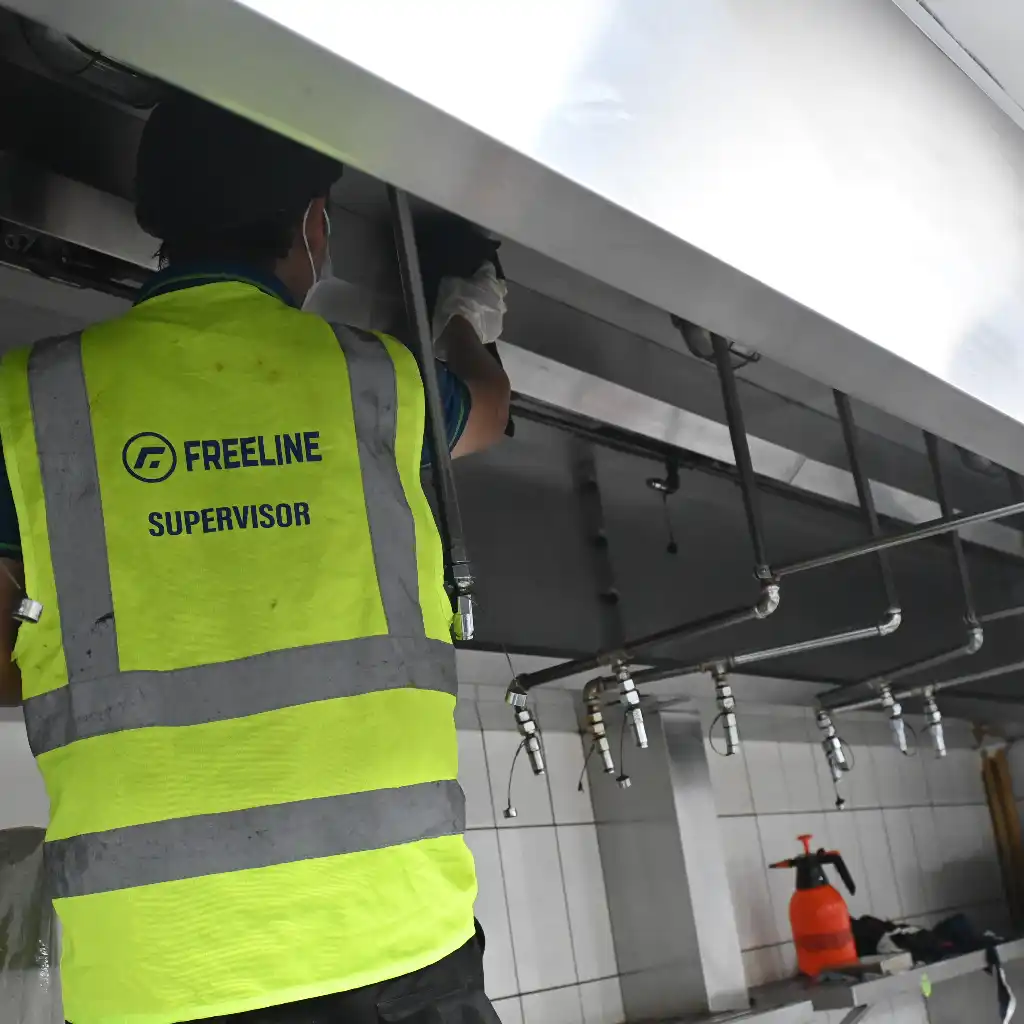
A qualified kitchen exhaust cleaning UAE provider follows a systematic process. The team begins with a full inspection of the hood, filters, duct interior, exhaust fan, and access panels to assess grease levels and any structural concerns. Filters are removed and degreased thoroughly using food-safe chemical agents. The duct interior is then cleaned using specialist brushes, scrapers, and high-pressure equipment, depending on the duct geometry and grease depth. All grease is collected and disposed of responsibly to avoid drain blockages or environmental hazards. After cleaning, a post-service inspection confirms that the system is clear, and a compliance certificate is issued. For kitchens dealing with heavy grease output, this process may also involve checking the condition of grease traps to ensure the full waste management chain is functioning correctly. Technicians also check ecology units, which play a key role in filtering odors and airborne grease before they enter the duct learn more about kitchen ecology unit cleaning in Dubai to keep your full exhaust system performing at its best.

How Often Should You Schedule Kitchen Duct Cleaning in Dubai?

Cleaning frequency depends on the volume and type of cooking your kitchen handles each day.

The NFPA 96 standard provides a practical framework. Kitchens that operate continuously  such as hotel kitchens, hospital canteens, and large restaurant chains should schedule cleaning every one to three months. Standard restaurants and cafeterias typically require cleaning every six months, while seasonal or low-volume operations may manage with an annual clean. Dubai’s hot and humid climate accelerates grease oxidation and bacterial growth inside ducts, which means UAE-based operators should err toward more frequent cleaning rather than less. Scheduling regular restaurant duct cleaning services protects your kitchen year-round and avoids the costly reactive repairs that come from neglect.

Conclusion

Kitchen duct cleaning in Dubai is one of the most important and most overlooked maintenance responsibilities in any commercial food operation. Grease accumulation is a silent danger that escalates from a hygiene issue into a genuine fire emergency when left unaddressed. Regular professional cleaning protects your staff, your customers, your property, and your operating licence. It ensures compliance with Dubai Civil Defence regulations and NFPA 96 standards while keeping your kitchen running efficiently and safely. If your last duct clean was more than six months ago, it is time to act. Contact Freeline today to schedule a professional kitchen duct cleaning service and keep your commercial kitchen safe, compliant, and spotless.

Kitchen duct cleaning involves removing grease, smoke residue, and contaminants from exhaust duct systems in commercial kitchens. In Dubai, it is essential for fire safety compliance, food hygiene standards, and meeting Dubai Civil Defence and NFPA 96 regulations. Neglected ducts are a leading cause of commercial kitchen fires.

NFPA 96 recommends cleaning every 1–3 months for high-volume kitchens, every 6 months for moderate-use operations, and annually for low-volume kitchens. Given Dubai’s heat and humidity, operators in the UAE should lean toward more frequent cleaning intervals to prevent accelerated grease buildup.

Yes. Dubai Civil Defence enforces fire safety inspections that include ventilation and exhaust systems. Commercial kitchens must comply with NFPA 96 standards, which mandate regular cleaning of hoods, ducts, and exhaust fans. Failure to comply can result in fines, operational shutdowns, or voided insurance.

Uncleaned ducts accumulate highly flammable grease layers that can ignite during normal cooking operations. Beyond fire risk, blocked or dirty ducts cause poor ventilation, bad odors, increased energy consumption, and contamination of the kitchen environment, all of which affect staff health and food safety.

The duration depends on duct size, grease level, and system complexity. A standard commercial kitchen duct clean typically takes between 3 to 8 hours. High-volume kitchens with extensive duct networks may require longer sessions or multiple visits to complete the work to compliance standards.

Kitchen hood cleaning focuses on the canopy, filters, and visible hood surfaces directly above cooking equipment. Kitchen duct cleaning covers the internal ductwork that channels exhaust air to the outside. Both are required for full compliance, the hood collects grease first, but residue continues to build up inside the ducts beyond.

Yes. Grease-clogged ducts restrict airflow, forcing exhaust fans to work harder and consume more electricity. Professional commercial kitchen ventilation cleaning restores full airflow capacity, reducing the load on fans and motors, which lowers energy bills and extends equipment lifespan.

A professional kitchen exhaust cleaning UAE company should carry valid trade licences, technical certifications aligned with NFPA 96, and should provide post-service compliance documentation. Freeline UAE provides certified services with full documentation to support your compliance audits.

Yes. A thorough restaurant duct cleaning service includes inspection and cleaning of the exhaust fan blades, motor housing, and fan casing. Grease-coated fan blades reduce airflow efficiency and create additional fire risk, so they are always addressed as part of a complete duct cleaning programme.

Key warning signs include visible grease dripping from hood filters, persistent cooking odors in dining areas, reduced airflow from vents, unusual fan noise, or a failed fire safety inspection. If any of these are present, schedule kitchen duct cleaning in Dubai immediately to avoid escalating risk.

Grease Trap Installation Guide: Protect Your Commercial Kitchen Plumbing
Running a commercial kitchen in Dubai without a properly installed grease trap is not just a maintenance risk it is a compliance failure waiting to happen. Grease trap installation in Dubai is a legal requirement for restaurants, hotels, cafeterias, and food processing facilities under Dubai Municipality regulations. Yet many business owners underestimate just how critical the right installation is. This guide walks you through everything you need to know  from choosing the correct size and type, to meeting local compliance standards  so your kitchen plumbing stays protected and your business stays operational.

Key Takeaways

  • Grease trap installation in Dubai is mandatory for all commercial food establishments under Dubai Municipality and UAE environmental standards.
  • Choosing the wrong size or type of grease trap leads to frequent blockages, foul odours, and costly emergency repairs.
  • Correct installation by a certified professional ensures long-term performance, regulatory compliance, and protection of your commercial kitchen plumbing.

What Is a Grease Trap and Why Does Your Kitchen Need One?

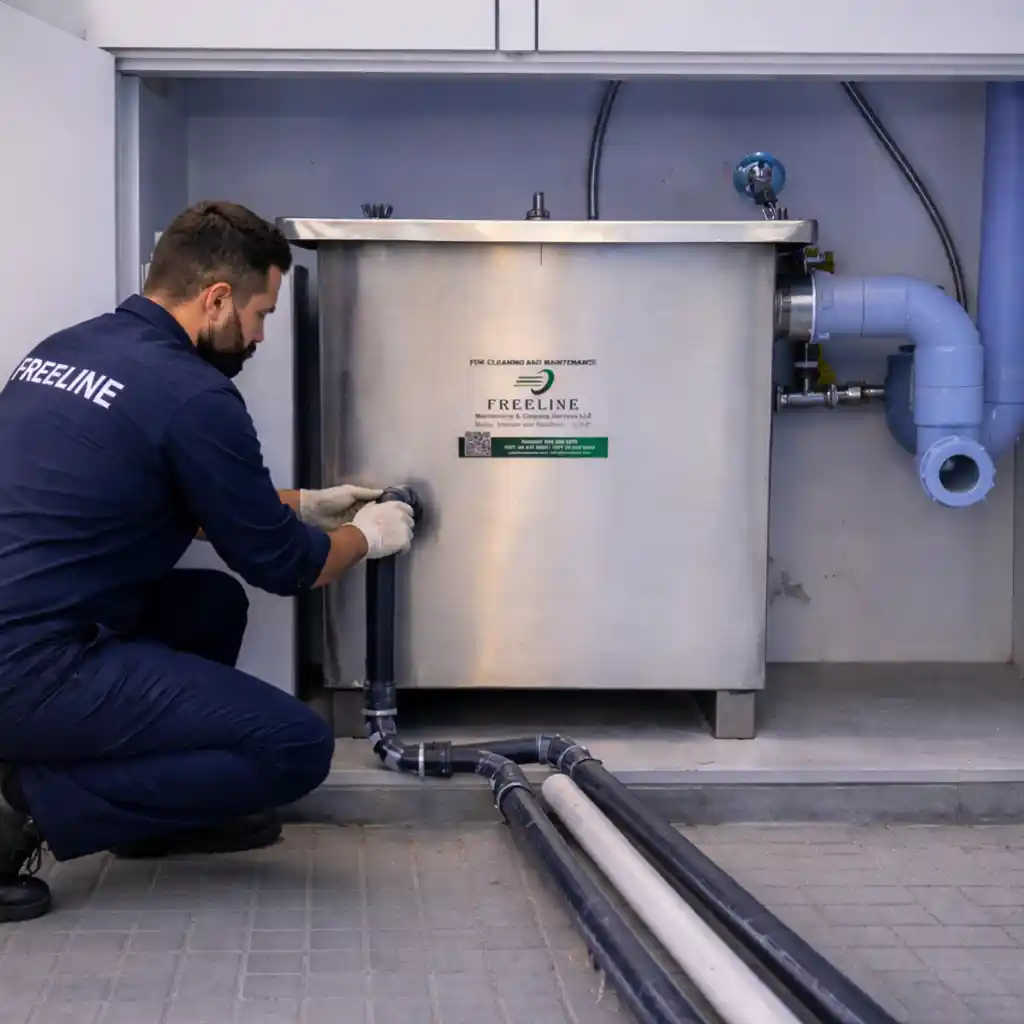
A grease trap  also called a grease interceptor — is a plumbing device designed to capture fats, oils, and grease (FOG) before they enter the municipal drainage system. Without one, FOG solidifies inside drain pipes and sewer lines, causing severe blockages, backflows, and expensive damage to both your kitchen and public infrastructure.

Understanding the role of grease traps in commercial kitchens is the first step toward protecting your plumbing system. Every sink, dishwasher, and cooking appliance in your kitchen produces FOG-laden wastewater. A correctly installed grease trap intercepts that wastewater, allows grease to separate and float to the top, and lets relatively clean water flow through to the drain. This simple mechanism prevents a chain of problems that can shut down your entire operation.

Dubai Municipality Requirements for Grease Trap Installation

Dubai has strict regulations governing FOG management in commercial food establishments, and non-compliance carries serious consequences.

Dubai Municipality mandates that all food and beverage establishments install approved grease traps or grease interceptors before connecting to the municipal sewage network. Inspections are carried out periodically, and businesses found operating without a properly installed and maintained grease trap face fines, operational suspensions, or licence revocations. For restaurant operators, restaurant compliance in Dubai is not optional — it directly affects your ability to stay open.

Key regulatory requirements include:

  • Grease traps must be sized according to the kitchen’s peak flow rate and meal volume.
  • Installations must use approved materials that meet Dubai Municipality standards.
  • Regular cleaning and maintenance records must be available for inspection.
  • All grease trap installation work must be carried out by a licensed contractor.

Partnering with an experienced team for grease trap supply and installation in Dubai ensures your setup meets all applicable codes from day one, saving you the cost and hassle of retrofits or penalties.

How to Choose the Right Grease Trap Size for Your Commercial Kitchen

Selecting the correct grease trap capacity is one of the most important decisions in the installation process. An undersized unit will overflow rapidly, creating foul odours and drainage failures. An oversized unit may be unnecessarily expensive and difficult to maintain.

The sizing of a grease trap is calculated based on several factors, including the number of meals served per day, the types of cooking performed (deep frying produces far more FOG than salad preparation), the number and type of kitchen fixtures connected to the trap, and the expected peak flow rate in litres per minute. A rule of thumb used in the industry is to calculate the total capacity of all connected sinks and appliances, then apply a sizing formula to determine the minimum grease trap volume in litres.

For most small to mid-sized restaurants in Dubai, units between 500 and 1,500 litres are common. Large-scale operations such as hotel kitchens or catering facilities may require custom-engineered grease interceptor installation UAE solutions with capacities exceeding 3,000 litres. Always consult a certified plumbing professional to carry out the calculation rather than guessing the cost of getting it wrong far outweighs the cost of a proper assessment.

Step-by-Step Grease Trap Installation Process

Understanding what the installation process involves helps you prepare your kitchen and timeline effectively.

  1. Site Assessment and Planning A qualified engineer surveys your kitchen layout, drainage plan, and local connection points. This determines whether an indoor under-sink unit or an outdoor in-ground interceptor is the right fit for your space.
  2. Selecting the Unit Based on the site assessment and sizing calculation, the appropriate grease trap model is selected. Materials typically used include fibreglass, polyethylene (HDPE), or concrete for larger in-ground systems.
  3. Excavation and Positioning (For In-Ground Units) For outdoor grease interceptors, excavation is required. The unit is positioned at the correct depth to allow gravity-fed flow from the kitchen outlet.
  4. Connecting to Kitchen Plumbing Inlet and outlet pipes are connected following the correct gradient to ensure proper flow. Baffles are installed inside the trap to improve grease separation efficiency.
  5. Testing and Commissioning Once installation is complete, the system is tested with water flow to verify that grease separation is working correctly and that there are no leaks or drainage issues. Documentation is prepared for Dubai Municipality compliance records.

Working with qualified professionals who offer comprehensive commercial kitchen plumbing solutions ensures every step meets the technical standard required for long-term, trouble-free operation.

Common Grease Trap Installation Mistakes to Avoid

Even well-intentioned installations can fail if common errors are made during planning or execution.

Incorrect pipe gradient is one of the most frequent problems. Pipes connected to the grease trap must slope at the correct angle  typically 1:40  to allow wastewater to flow freely. Too steep and solids rush through without settling; too flat and blockages form quickly.

Placing the trap too far from the kitchen is another issue. The longer the distance between the cooking area and the grease trap inlet, the more likely grease is to cool and solidify in the pipe before even reaching the unit. Best practice is to position the trap as close to the source as possible.

Using the wrong trap type for the installation environment is also a costly mistake. Indoor under-sink traps are not designed for the volumes produced by a busy restaurant kitchen. Conversely, specifying an oversized in-ground interceptor for a small café creates unnecessary maintenance burdens and expense.

Finally, neglecting maintenance planning during installation is a mistake that compounds over time. Your grease trap should be designed with easy access for cleaning in mind. If the access lids are difficult to reach or the unit is not positioned for a tanker vehicle, your cleaning team will struggle and cleaning intervals will be skipped. According to Dubai Municipality’s FOG management guidelines, commercial grease traps should be pumped and cleaned on a schedule appropriate to the volume of FOG produced, typically every 30 to 90 days for active restaurant kitchens.

Maintaining Your Grease Trap After Installation

Installation is just the beginning. A grease trap that is not regularly maintained quickly becomes a liability. Grease accumulates in the trap over time, reducing its effective capacity and eventually causing overflows and drain backups. Odour problems are often the first sign that a trap is overdue for cleaning.

Professional grease trap cleaning services in Dubai use specialist vacuum tankers to pump out accumulated FOG, clean the internal baffles, and inspect the unit for damage or deterioration. Regular servicing not only protects your drainage system but also extends the working life of the trap itself.

For a detailed breakdown of how to keep your unit in top condition between professional cleans, refer to our grease trap maintenance tips for Dubai restaurants and cafes. Combining good daily kitchen practices such as scraping plates and pots before washing  with scheduled professional servicing creates the most effective FOG management system for any commercial kitchen.

If your drainage system is already experiencing slow flow or partial blockages alongside your grease trap issues, it may also be worth considering a professional drain line jetting service to clear any existing FOG build-up from your pipe network before commissioning a new trap.

Conclusion

Proper grease trap installation in Dubai is a non-negotiable part of running a compliant, efficient, and sustainable commercial kitchen. From selecting the right size and type to following Dubai Municipality regulations and maintaining the system on schedule, every step matters. Shortcuts at the installation stage lead to operational problems, compliance failures, and costly repairs down the line. Investing in a professionally installed, correctly sized grease trap and keeping it well maintained is the smartest protection you can give your kitchen plumbing and your business.

At Freeline Maintenance & Services LLC, we provide expert grease trap supply, installation, and maintenance across Dubai and the UAE. Contact us today to get a site assessment and ensure your kitchen is fully compliant and protected.

Yes. Dubai Municipality requires all commercial food establishments to install an approved grease trap or grease interceptor before connecting to the municipal sewer network. Operating without one can result in fines, suspension, or licence cancellation.

Grease trap sizing is calculated based on your kitchen’s peak wastewater flow rate, the number of meals served daily, and the types of cooking performed. A licensed plumber or engineer should carry out the calculation to ensure compliance with Dubai Municipality standards.

A grease trap is typically a smaller, indoor unit installed under the sink, suited for low-volume kitchens. A grease interceptor is a larger, in-ground unit installed outside, designed to handle the high FOG volumes produced by busy restaurant or hotel kitchens.

Most active commercial kitchens in Dubai require grease trap cleaning every 30 to 90 days, depending on the volume of FOG produced. Dubai Municipality may specify a minimum cleaning frequency, and records should be maintained for inspection purposes.

No. Grease trap installation in Dubai must be carried out by a licensed contractor. DIY installation does not meet regulatory requirements and will not pass Dubai Municipality inspections.

A neglected grease trap fills with accumulated FOG, causing drainage backups, foul odours, and potential blockages in the municipal sewer line. This can lead to regulatory fines and expensive emergency plumbing repairs for your business.

Commercial grease traps used in the UAE are typically made from fibreglass, high-density polyethylene (HDPE), or reinforced concrete for large in-ground interceptors. The material choice depends on the installation environment and required capacity.

For a standard indoor unit, installation typically takes one to two days. Larger in-ground interceptors requiring excavation may take three to five days depending on site conditions and the complexity of the drainage connection.

Signs that a grease trap may need replacement include persistent foul odours despite regular cleaning, visible cracks or structural damage to the unit, recurring drainage backflows, and reduced separation efficiency. A professional inspection can confirm whether repair or replacement is needed.

Yes. Freeline Maintenance & Services LLC provides grease trap supply and installation across Dubai, Abu Dhabi, and the wider UAE. Our team handles everything from site assessment and sizing to installation, testing, and ongoing maintenance support.

Kitchen Hood Cleaning in Dubai: A Complete Guide for Fire Safety & Compliance
Introduction

If you run a restaurant or commercial kitchen in Dubai, kitchen hood cleaning Dubai regulations are not optional they are a legal requirement. Grease accumulates in your exhaust hood every day, quietly raising the risk of fire and regulatory penalties. Dubai Civil Defence and NFPA 96 standards exist precisely because neglected hoods are one of the leading causes of commercial kitchen fires. This guide walks you through everything you need to know: the legal framework, how cleaning is done, how often to schedule it, and what happens when compliance is ignored.

Key Takeaways

  • Kitchen hood cleaning in Dubai is mandatory under Dubai Civil Defence regulations and NFPA 96 standards non-compliance can result in fines or forced closure.
  • Most commercial kitchens in Dubai require professional hood cleaning every one to three months depending on cooking volume and type.
  • Proper kitchen exhaust cleaning UAE-wide reduces fire risk, improves air quality, and extends the life of your exhaust equipment.

Why Kitchen Hood Cleaning Is a Legal Requirement in Dubai

Commercial kitchens in Dubai operate under strict fire safety laws that make professional hood cleaning non-negotiable.

Dubai Civil Defence enforces fire safety standards across all food service establishments, including restaurants, hotel kitchens, cloud kitchens, and catering facilities. Under these regulations, kitchen exhaust systems must be maintained and inspected on a defined schedule. The internationally recognised NFPA 96 standard Standard for Ventilation Control and Fire Protection of Commercial Cooking Operations is the technical benchmark used in the UAE. It specifies cleaning frequencies based on the volume and type of cooking. Failure to comply can result in warnings, fines, or even temporary closure of your establishment. Kitchen hood cleaning is therefore not just a hygiene matter it is a legal and commercial necessity for every food business in Dubai.

The Hidden Fire Risk: What Grease Build-Up Actually Does

Grease is not just a mess it is a highly flammable fuel source that accumulates silently inside your exhaust system.

Every time food is cooked on an open flame or high-heat surface, grease-laden vapours rise into the exhaust hood and travel through the duct system. Over time, this grease deposits onto every internal surface. A single spark from a gas burner, an overheated pan, or an electrical fault is enough to ignite a grease layer and send a flash fire racing through the duct system and into the ceiling cavity. According to the National Fire Protection Association, commercial cooking equipment is the leading cause of restaurant fires globally. In Dubai’s high-volume, high-temperature kitchen environments, this risk is compounded by continuous operation and intense cooking methods. Regular kitchen exhaust cleaning UAE services are the most direct way to eliminate this fire hazard at its source.

How Professional Kitchen Hood Cleaning Works

Professional commercial kitchen hood maintenance follows a systematic, multi-stage process designed to remove every trace of grease from the system.

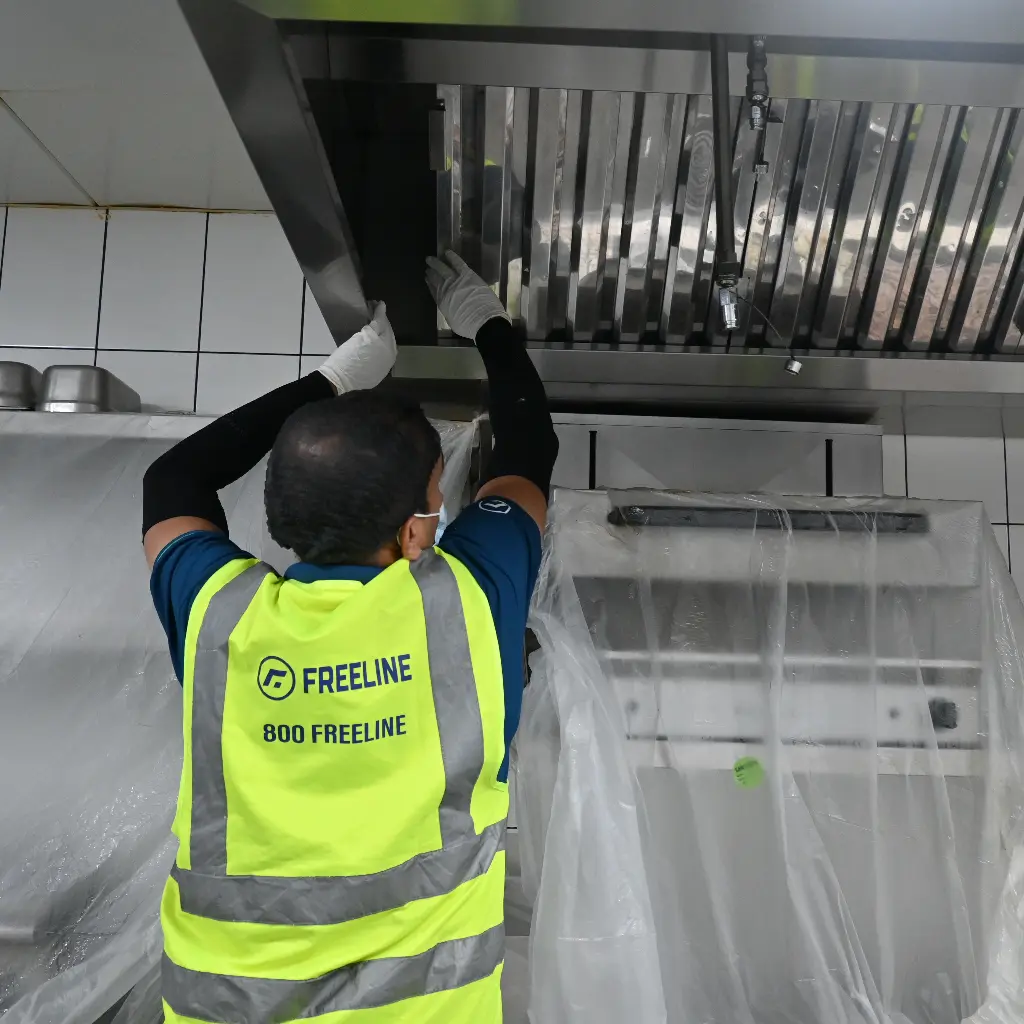
A certified technician begins by covering cooking equipment and surfaces to protect them from cleaning agents. The hood filters are removed and soaked in a degreasing solution. The interior of the hood, all duct surfaces, fans, and motors are then cleaned using high-pressure hot water jetting combined with industrial-grade degreasers. This process removes grease not just from visible surfaces but from the deep interior sections of the ductwork that a standard kitchen clean would never reach. Once cleaning is complete, the technician inspects the entire system for damage, blockages, or compliance issues. A service certificate is issued, which serves as documentation for Dubai Civil Defence inspections. This full-service approach is what separates professional commercial kitchen hood maintenance from a basic in-house wipe-down.

How Often Should You Schedule Kitchen Hood Cleaning in Dubai?

Cleaning frequency depends on your cooking volume, fuel type, and the kind of food you prepare and NFPA 96 gives clear guidance on each category.

Cooking Type / VolumeRecommended Cleaning Frequency
High-volume operations (24-hour, wok cooking, charbroiling)Monthly
Moderate-volume (standard restaurants, cafes)Every 3 months
Low-volume (seasonal, day-use kitchens)Every 6 months
Solid fuel cooking (wood, charcoal)Monthly or more frequently

Most mid-range Dubai restaurants fall into the quarterly category, but hotel kitchens, fast-food chains, and high-throughput commercial operations will need monthly service. Your cleaning provider should assess your operation and recommend a schedule that keeps you compliant. It is also worth noting that the grease in your kitchen hood is connected to the broader grease management system grease trap cleaning in Dubai should be scheduled alongside hood cleaning for a fully compliant kitchen.

Restaurant Safety Compliance Dubai: What Inspectors Look For

Understanding what Dubai Civil Defence inspectors check gives you a clear picture of the compliance standard your kitchen must meet.

Inspectors assess the physical condition and cleanliness of the hood, filters, ductwork, and exhaust fans. They look for grease accumulation levels, evidence of recent professional cleaning, and the presence of a valid service certificate from a licensed provider. They also check that the system’s airflow and suppression systems are functional and unobstructed. Maintaining restaurant safety compliance Dubai requires documented proof of cleaning on schedule verbal assurances are not accepted. Kitchens that fail an inspection may be required to close until the issue is remedied, causing significant revenue loss. Building a regular cleaning schedule with a certified provider, and keeping records of every service visit, is the only reliable way to stay ahead of inspections.

The Business Case: Beyond Compliance

Keeping your kitchen hood clean has direct financial benefits that go well beyond avoiding fines.

A clean exhaust system operates more efficiently. Fans and motors that are free of grease build-up run at lower temperatures, consume less energy, and last significantly longer. Poor exhaust performance also affects the working environment a greasy, poorly ventilated kitchen is hotter, smokier, and less safe for your team. Staff retention in Dubai’s hospitality sector is already challenging; a clean, compliant kitchen is a meaningful workplace improvement. Additionally, insurers often require evidence of regular kitchen exhaust cleaning UAE compliance before settling fire-related claims. A lapse in cleaning documentation can void your insurance payout at the worst possible moment. For a complete overview of kitchen cleaning requirements, the Kitchen Hood Cleaning: A Guide to a Cleaner and Safer Kitchen on Freeline’s blog is a useful reference.

Conclusion

Kitchen hood cleaning in Dubai is the intersection of fire safety, legal compliance, and operational efficiency. The standards set by Dubai Civil Defence and NFPA 96 exist to protect your staff, your customers, and your business and meeting them consistently is straightforward when you work with a qualified provider. From monthly cleans in high-volume kitchens to quarterly service in standard restaurants, the right schedule keeps grease from becoming a liability. Freeline Maintenance & Services provides professional kitchen exhaust cleaning across the UAE, with certified technicians, full documentation, and a service record you can present with confidence at any inspection. Contact Freeline today to book your kitchen hood cleaning or discuss a maintenance schedule tailored to your operation.

Kitchen hood cleaning removes grease deposits from exhaust hoods, filters, ducts, and fans in commercial kitchens. In Dubai, it is required by Dubai Civil Defence regulations and NFPA 96 standards to prevent kitchen fires and maintain a safe, compliant food service operation.

NFPA 96 recommends monthly cleaning for high-volume kitchens using charbroiling or wok cooking, quarterly for standard restaurants, and every six months for low-volume operations. Your cleaning provider should assess your kitchen and recommend the right frequency for compliance.

Yes. Dubai Civil Defence mandates regular kitchen exhaust system maintenance for all commercial food service establishments. Non-compliance can lead to fines, failed inspections, or forced closure. Keeping documentation of professional cleaning is essential for passing inspections.

A professional service covers the hood canopy, filters, internal ductwork, exhaust fans, and motors. Technicians use hot water pressure jetting and industrial degreasers to remove all grease. A compliance certificate is issued after each clean for your records.

Costs vary based on kitchen size, system complexity, and cleaning frequency. Contact a licensed provider like Freeline for a site-specific quotation. Many businesses find that commercial kitchen duct cleaning packages offer better value when combined with other maintenance services.

Grease accumulation creates a serious fire hazard, risks failed Dubai Civil Defence inspections, may void your insurance coverage, and leads to poor air quality and reduced equipment lifespan. Regular cleaning is far less costly than the consequences of neglect.

Surface filters can be cleaned in-house regularly, but deep duct and fan cleaning requires professional equipment and certified technicians. DIY cleaning does not meet Dubai Civil Defence compliance requirements and will not produce the service certificate needed for inspections.

NFPA 96 is the international standard for ventilation control and fire protection of commercial cooking operations. It is the benchmark referenced by Dubai Civil Defence for kitchen exhaust system maintenance, specifying cleaning frequencies, methods, and documentation requirements.

Both systems manage grease in a commercial kitchen. The hood captures airborne grease vapours from cooking, while the grease trap handles grease in wastewater. Scheduling both services together ensures comprehensive kitchen compliance in Dubai.

Choose a provider with licensed technicians, experience with NFPA 96 compliance, the ability to issue service certificates, and a clear track record in the UAE market. Verify they cover full duct cleaning, not just the visible hood canopy, for genuine fire safety protection.

Drain Line Jetting: The Most Effective Solution for Blocked Drains

Blocked drains are one of the most disruptive problems any property owner can face — and in Dubai’s fast-paced environment, you simply cannot afford to wait. Drain line jetting Dubai is the go-to solution for clearing stubborn blockages quickly, safely, and thoroughly. Whether you manage a residential villa, a commercial tower, or a retail outlet, Freeline’s professional drain line jetting service restores full flow to your drainage system without damaging your pipes. In this guide, you will learn exactly how the process works, why blocked drains are so common in UAE properties, and when it is time to call in the experts.

Key Takeaways

  • Drain line jetting uses powerful, pressurised water to blast away grease, scale, and debris — far more effectively than chemical cleaners or manual rodding.
  • Dubai’s unique climate, hard water supply, and ageing pipe infrastructure make high pressure drain cleaning a routine necessity, not a luxury.
  • Scheduling regular sewage line cleaning in UAE properties prevents expensive emergency repairs and keeps your drainage system compliant and odour-free.

What Is Drain Line Jetting and How Does It Work?

Drain line jetting is a high-powered, water-based method that scours the interior walls of drainage pipes to remove blockages completely — not just temporarily.

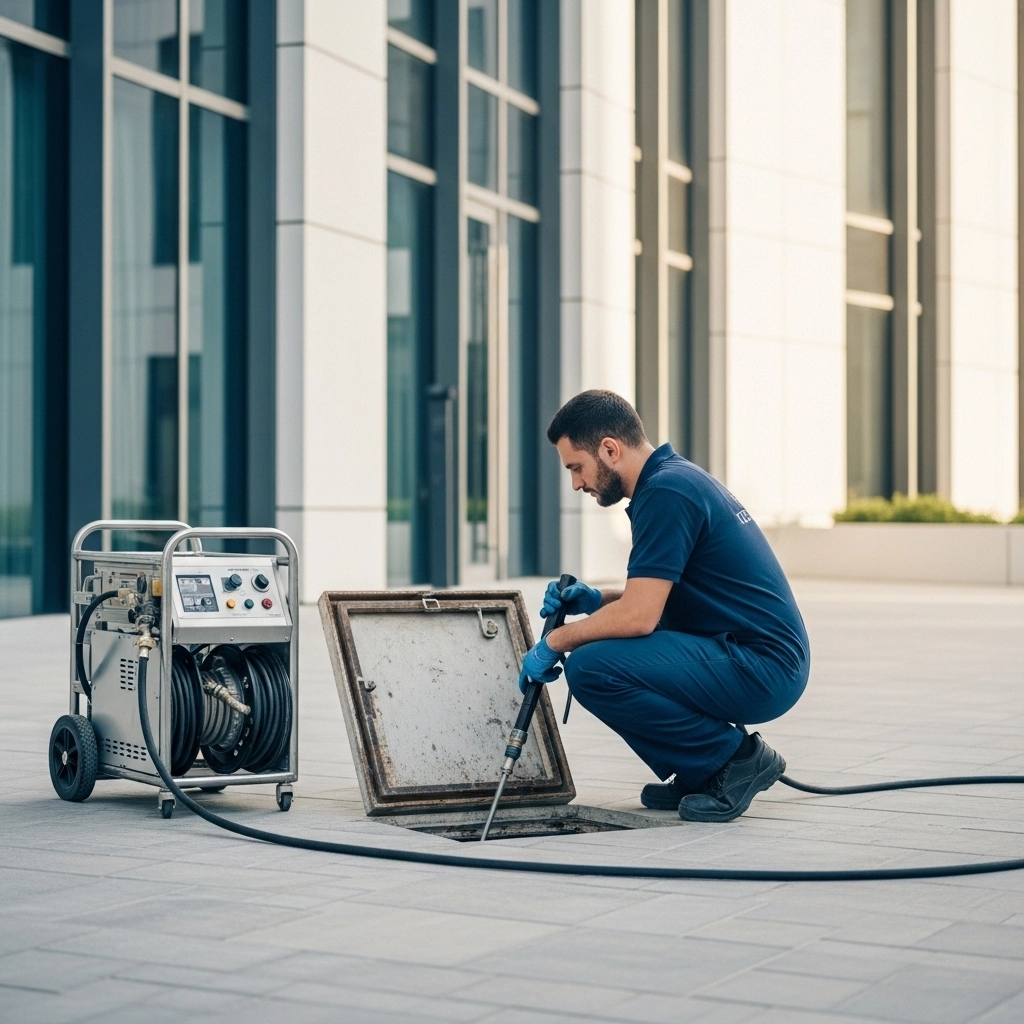
The process uses a motorised pump to push water through a flexible hose at extremely high pressure — typically between 1,500 and 4,000 PSI, depending on the severity of the blockage and pipe diameter. A specialist nozzle at the end of the hose directs jets of water both forward and backward, cutting through grease, mineral scale, tree roots, and compacted debris that conventional snaking tools simply cannot reach.

Once the obstruction breaks apart, the water flow carries the dislodged material out of the pipe and into the municipal sewer network. The result is a drain that is not just unblocked but genuinely clean — with pipe walls cleared of the build-up that causes recurring clogs. This is why property managers across Dubai increasingly choose professional drain line jetting services in Dubai and Abu Dhabi over quick-fix solutions that only delay the problem.

Why Dubai Properties Face Frequent Drain Blockages

A combination of hard water, high grease usage, and rapid urban development makes blocked drains a persistent challenge across UAE residential and commercial properties.


Stat Detail
~500 mg/L Average total dissolved solids in UAE tap water — well above the 250 mg/L WHO guideline, contributing to heavy scale build-up in pipes.
40°C+ Summer temperatures that accelerate grease solidification inside drain lines, increasing blockage risk significantly.
Up to 80% Of drain call-outs in commercial kitchens are linked to accumulated grease — a primary driver for high pressure drain cleaning demand.


Dubai’s mains water supply has one of the highest mineral contents in the world. Over time, calcium and magnesium deposits cling to the inside of drainage pipes, steadily narrowing the channel through which wastewater must pass. When you combine this with the heavy cooking oils common in UAE households and restaurants, the conditions for a serious blockage are created rapidly.

Older buildings — particularly those constructed before the 2000s — often feature smaller-diameter pipework that was not designed to handle today’s water consumption volumes. Rapid population growth and construction activity in areas like Al Quoz, Deira, and Bur Dubai have further strained existing drainage infrastructure. According to Dubai Municipality’s guidelines on drainage and sewerage, property owners have a responsibility to keep their private drainage systems clear and free-flowing. Regular sewage line cleaning UAE-wide is therefore not just good practice — it is a compliance requirement for many building categories.

Recognising the early warning signs can save you from an emergency. If you notice slow-draining sinks, gurgling sounds, or recurring bad odours, check out the top signs that your drain needs professional attention before the situation escalates.


Benefits of High Pressure Drain Cleaning for Homes and Businesses

High pressure drain cleaning delivers long-lasting results, protects pipe integrity, and is safe for both residential and commercial drainage systems when handled by trained professionals.

Unlike chemical drain cleaners that can corrode pipes over repeated use, or manual rodding that may only poke a hole through a blockage, high pressure drain cleaning removes the entire obstruction and leaves the pipe walls spotless. This thorough approach means blockages take far longer to return, reducing the frequency of service calls and the disruption to your daily routine.

Here is what you gain with a professional jetting service:

  • Complete blockage removal — grease, scale, roots, and sediment are fully flushed out, not just displaced further down the pipe.
  • Improved flow rate — restored pipe diameter means water drains as fast as the day your plumbing was installed.
  • Odour elimination — decomposing organic matter trapped in pipes is a primary source of persistent drain smells; jetting removes it entirely.
  • Pipe-safe process — modern jetting equipment is calibrated to the pipe material, making it safe for PVC, cast iron, and HDPE drainage systems.
  • Cost savings over time — clearing the root cause of a blockage is always cheaper than repairing water damage caused by an overflow. Learn more about how drain line jetting can save time and money for property owners.

For commercial kitchens, restaurants, and food-and-beverage outlets, high pressure drain cleaning is especially valuable. Grease accumulation can be extreme in these environments, and a blocked drain in a kitchen means a mandatory shutdown until the issue is resolved. Scheduling routine jetting — typically every three to six months — keeps operations running without interruption.

When to Schedule Sewage Line Cleaning in UAE Properties

Sewage line cleaning in UAE properties should be treated as preventive maintenance rather than an emergency response — timing makes all the difference to cost and disruption.

Many property owners wait until a drain is fully blocked before calling a professional. By that point, wastewater may already be backing up into sinks, showers, or floor drains — creating a hygiene hazard and potential structural damage. Proactive sewage line cleaning UAE-wide protects your investment and keeps tenants and customers comfortable.

Schedule a professional jetting service in these situations:

  • Slow drainage across multiple fixtures simultaneously — a sign the main line is affected.
  • Recurring blockages within weeks of a previous manual clearance.
  • Foul smells from drain openings that persist despite surface cleaning.
  • Visible water stains or damp patches on ground-floor ceilings, indicating backpressure from a blocked drain.
  • Before or after major renovation works, when debris may have entered the drain system.
  • As part of an Annual Maintenance Contract (AMC) to ensure year-round drainage performance.

Preventive action is significantly cheaper than reactive repair. A blocked sewage line that causes overflow can damage flooring, walls, and electrical systems — all costs that a routine cleaning appointment would have prevented entirely. If your property has experienced repeated plumbing issues, it may also be worth reviewing how to prevent costly plumbing emergencies with a structured maintenance plan.

How Freeline Handles Drain Line Jetting in Dubai

Freeline’s trained technicians use professional-grade jetting equipment and a systematic approach to clear drainage systems thoroughly, with minimal disruption to your property.

Freeline Maintenance & Services LLC serves residential and commercial clients across Dubai and the wider UAE. When you book a drain line jetting appointment, the process begins with a site assessment — technicians inspect the access points, determine the pipe diameter, and identify the likely cause of the blockage. Where necessary, CCTV drain inspection is used to view the inside of the pipe before and after jetting, giving you a clear picture of the condition of your drainage system.

The team then selects the appropriate jetting nozzle and pressure setting for your specific pipework, ensuring thorough cleaning without risk of damage. Once jetting is complete, a post-service check confirms full flow has been restored and there are no secondary blockages further down the line.

Freeline also offers Annual Maintenance Contracts that include scheduled drain jetting at agreed intervals — ideal for multi-unit residential buildings, hotels, restaurants, and commercial facilities. For a detailed breakdown of what a professional service includes, visit our guide to clearing drain clogs fast with high pressure water jetting.

Conclusion

Blocked drains are more than an inconvenience — they are a maintenance problem that worsens every day it goes unaddressed. Drain line jetting Dubai offers the most complete and long-lasting solution available, removing blockages at their source rather than simply masking them. Whether you need an emergency clearance or want to set up a preventive maintenance schedule, Freeline’s professional high pressure drain cleaning and sewage line cleaning UAE services are designed to keep your property running smoothly, year-round. Contact Freeline today to book a drain line jetting assessment and protect your property before a minor drainage issue becomes a major repair.
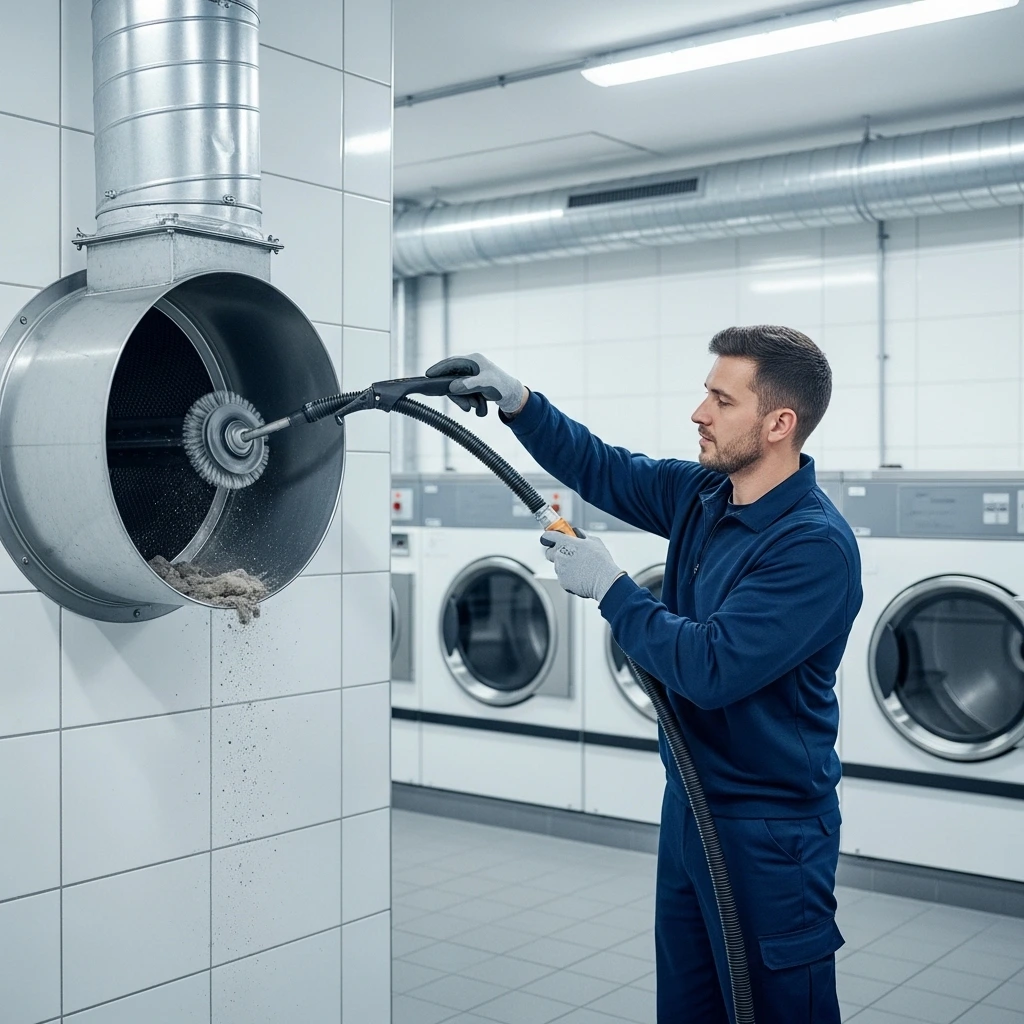
Importance of Laundry Air Duct Cleaning for Hotels & Commercial Facilities

Hotels, hospitals, and commercial laundries run their dryers for hours every day — and that creates a serious, often invisible problem. Laundry air duct cleaning is one of the most overlooked maintenance tasks in the hospitality and facilities management industry. Lint, debris, and moisture accumulate inside exhaust ducts faster than most operators realise, creating conditions that lead to fire outbreaks, poor indoor air quality, and costly equipment failures. This guide explains why scheduling regular duct cleaning in Dubai — including laundry exhaust systems — is a non-negotiable priority for any well-run facility in the UAE.

Key Takeaways

  • Clogged laundry ducts are a leading cause of commercial dryer fires — regular lint removal duct cleaning directly reduces this risk.
  • Clean laundry exhaust systems improve dryer efficiency by up to 30%, cutting energy costs for high-volume facilities.
  • Commercial laundry ventilation cleaning is essential for hotels, hospitals, and residential towers operating industrial laundry equipment.

Why Laundry Ducts in Commercial Facilities Get Dirty Faster

High-cycle laundry operations produce far more lint and moisture than most facility managers anticipate, causing rapid duct contamination that demands structured maintenance schedules.

A standard hotel processes hundreds of linen items every single day. Each cycle pushes warm, moist air — along with fine lint fibres — through the exhaust duct system. Over weeks and months, lint builds layer by layer along duct walls, at bends, and near exhaust exits. The warm, humid UAE climate accelerates this process, as moisture causes lint to compact and stick more aggressively than in cooler environments. Facilities without a scheduled dryer duct cleaning services plan often discover significant blockages only after a breakdown or an incident occurs.

Industrial-grade dryers used in hotels, spas, and hospital laundries operate at higher temperatures and longer run times than domestic units. This means the volume of lint discharged per hour is substantially greater. Without frequent laundry air duct cleaning, a duct that was clear six months ago may be 60–70% blocked today — drastically reducing airflow and overworking the dryer motor.

Key Industry Data


Metric Figure Source
Commercial dryer fires annually (US) 2,900+ NFPA
Fires caused by failure to clean lint 34% NFPA
Potential energy savings from clean ducts Up to 30% U.S. Dept. of Energy

Source: National Fire Protection Association (NFPA) — Dryer Fire Statistics

The Fire Hazard Hidden Inside Your Laundry Ventilation System

Lint is highly combustible. When it accumulates in a hot, restricted exhaust duct, the risk of a dryer fire rises exponentially — making lint removal duct cleaning a critical safety measure.

Lint is essentially a concentration of tiny, dry fibres from fabric. It ignites at relatively low temperatures and burns quickly. When a laundry duct is partially blocked, heat cannot escape efficiently. The dryer then runs hotter and longer to achieve the same drying result — creating the exact conditions that allow lint to combust. This is precisely why lint removal duct cleaning must be treated as a fire safety protocol, not just a maintenance task. A blocked duct in a hotel laundry room poses a genuine risk to the building, its guests, and its staff.

Proper HVAC maintenance and ventilation management go hand-in-hand with laundry duct safety. When exhaust systems are compromised, the entire building’s air management can be affected — leading to humidity build-up, mould risk, and reduced indoor air quality throughout the facility. A structured maintenance approach addresses both risks together, reducing the chance of unexpected shutdowns or fire incidents.

Warning Signs Your Laundry Ducts Need Immediate Attention

  • Dryers take significantly longer than usual to dry a standard load.
  • Exterior of the dryer feels unusually hot during or after operation.
  • A burning or musty smell is present near the laundry area.
  • Exhaust vent flap does not open fully when the dryer is running.
  • Visible lint collecting around duct openings or on external vents.
  • Energy bills for laundry operations have increased without explanation.

How Regular Cleaning Improves Energy Efficiency and Equipment Life

A clean commercial laundry ventilation system means shorter drying cycles, lower energy use, and longer equipment life — all of which directly reduce operating costs for hotels and facilities.

When lint restricts airflow, the dryer motor compensates by running at higher intensity and for longer periods. This increases electricity consumption considerably over time. Hotels and commercial laundries processing hundreds of loads weekly can see energy bills rise noticeably when their commercial laundry ventilation cleaning schedule lapses. Studies by the U.S. Department of Energy indicate that blocked dryer vents can reduce dryer efficiency by up to 30%. Over a full year, that represents a meaningful increase in operational costs for a large property.

Equipment damage is another hidden cost. Overheated dryer motors and components wear out faster under the strain of poor ventilation. Drum bearings, heating elements, and control circuits all experience accelerated wear. Professional dryer duct cleaning services not only extend the life of your equipment but also reduce unplanned downtime — a critical concern for hotels where laundry operations run continuously. Just as you would invest in kitchen hood cleaning in Dubai to protect restaurant ventilation systems, investing in laundry duct maintenance protects your entire laundry infrastructure.

Compliance and Indoor Air Quality: What Facility Managers Must Know

In the UAE, commercial facilities are held to strict fire and hygiene standards. Unclean laundry ventilation systems can result in regulatory non-compliance and pose serious health risks to occupants.

The UAE Civil Defence and various municipal authorities require commercial buildings — including hotels — to maintain ventilation and exhaust systems in safe, functional condition. Blocked laundry exhaust ducts are a documented fire risk and can result in inspection failures or, in serious cases, facility shutdown notices. For hotel operators and facility managers, the cost of non-compliance far exceeds the cost of routine laundry air duct cleaning.

Beyond fire safety, poorly maintained laundry ducts affect indoor air quality. When exhaust flow is restricted, warm, moist air can back-feed into laundry areas, raising humidity levels and promoting mould and bacterial growth. This is particularly problematic in enclosed hotel laundry rooms where staff work for extended periods. Clean commercial laundry ventilation cleaning protects both the health of your team and the comfort of your guests.

How Often Should Hotels Schedule Laundry Air Duct Cleaning?

Cleaning frequency depends on laundry volume, duct length, and equipment type. High-volume commercial facilities typically require professional cleaning every three to six months.

There is no universal schedule, but the table below provides a reliable starting framework for most commercial and hospitality operators. Always consult a qualified maintenance professional to assess your specific duct configuration, equipment type, and usage volume.


Facility Type Daily Laundry Loads Recommended Cleaning Interval
Large Hotel (200+ rooms) 100+ loads Every 3 months
Mid-Size Hotel / Serviced Apartment 40–100 loads Every 4–6 months
Hospital / Healthcare Facility 50–150 loads Every 3 months
Commercial Laundromat 80–200 loads Every 2–3 months
Residential Tower (shared laundry) 20–40 loads Every 6–12 months

For the most reliable results, pair your laundry duct cleaning schedule with a broader building maintenance plan. Following HVAC maintenance tips for Dubai properties will help you build a comprehensive, proactive approach to all your facility’s ventilation needs — ensuring every system operates safely and efficiently year-round.

Conclusion: Make Laundry Duct Cleaning a Priority, Not an Afterthought

The evidence is clear: neglecting laundry air duct cleaning puts your facility at risk of fire, regulatory penalties, equipment failure, and rising energy costs. For hotels, hospitals, and commercial laundries in the UAE, where operations run around the clock in a demanding climate, a structured duct cleaning programme is not a luxury — it is an operational necessity. Clean ducts mean safer premises, lower utility bills, and longer-lasting equipment.

Freeline Maintenance & Services LLC provides professional dryer duct cleaning services and full-facility maintenance solutions across the UAE. Whether you manage a single property or a portfolio of commercial facilities, our team is equipped to keep your laundry ventilation systems safe, compliant, and efficient. Contact Freeline today to schedule an inspection or discuss an Annual Maintenance Contract tailored to your facility’s needs.

error: